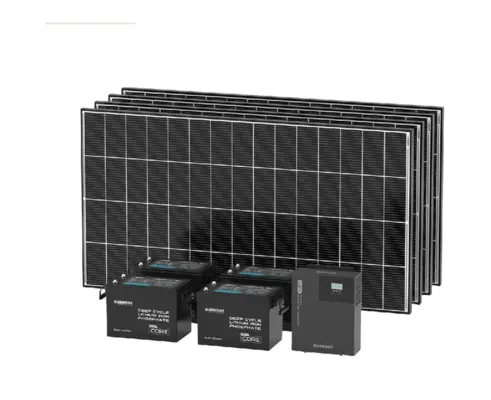
A solar panel makes more voltage when it is cold. On a clear winter morning, the open-circuit voltage (Voc) of a panel or a string of panels can sit well above the number on the sticker, and if it passes the maximum input voltage of your charge controller or power station, it can damage the equipment. The fix is arithmetic you do before you wire: find the panel's Voc temperature coefficient, correct for your lowest expected temperature, and compare the result with the limit in your manual.
Why voltage rises as temperature falls
A silicon solar cell's voltage depends on temperature through a leakage current inside the cell, which grows quickly as the cell warms and pulls the voltage down. The PVEducation reference on solar cell operation puts the effect for silicon at roughly 2.2 millivolts per degree Celsius per cell, in the sense that a cooler cell gives a higher Voc. A panel strings many cells in series, so the effect adds up across the panel. You do not need that cell-level number for planning. Your panel's datasheet already gives a temperature coefficient for Voc, and that is the figure to use.
Cold weather is also when panels work well: bright, clear and cool. The high-voltage condition and the high-production condition arrive together, and that is why winter mornings are when a mismatched string gets caught.
What the manual limit means
A controller maker's FAQ describes the Voc limit as the maximum voltage listed in the operator manual that the controller can support, says exceeding it damages the controller, and tells you to compare your array voltage with that rating before installing. It also says to calculate the array voltage at the lowest temperature the system will see. Power stations publish a similar maximum solar input voltage, and our solar input specs guide shows where to find it. The limit is a hard ceiling, not a target.
The check, step by step
- Find the sticker Voc and the Voc temperature coefficient on the panel datasheet. The coefficient is usually listed as a percent per degree or as a voltage per degree and is negative, meaning voltage goes up as temperature goes down.
- Note the test temperature. Datasheet ratings are given at standard test conditions, which use a cell temperature of 25 degrees C (77 degrees F).
- Choose your lowest temperature. Use the coldest temperature your site can plausibly reach, not the average winter day. Local weather records are a starting point.
- Correct the Voc. For a percent coefficient: cold Voc = sticker Voc x (1 + coefficient size in percent / 100 x degrees below 25 C). Use the coefficient as a positive number here, because the voltage rises. If your datasheet gives volts per degree instead, add that amount for each degree below 25 C.
- Multiply for a string. Panels in series add their voltages, so multiply the corrected Voc by the number of panels. The series versus parallel guide shows how wiring changes the totals.
- Compare with the manual. The corrected string Voc must stay under the controller or station maximum input voltage, with margin. Ask the maker how much margin they want.
| You need | Where to find it |
|---|---|
| Sticker Voc | Panel label and datasheet |
| Voc temperature coefficient | Panel datasheet, thermal section |
| Lowest expected temperature | Local weather records for your site |
| Number of panels in series | Your wiring plan |
| Maximum input voltage | Controller or power station manual |
Where people get caught
- Series strings. Two or three panels that are fine in parallel can exceed a limit in series.
- Adding a panel later. A string that passed in summer can fail once another panel joins it.
- Using the average temperature. Cold snaps set the number, not the average.
- Trusting the sticker. The sticker is a warm-weather value. Compare against the corrected one.
- Mixing up Voc and Vmp. Voc is the safety check. Vmp matters for the working voltage window. The panel spec decoder explains both.
The controller model matters too. Our controller guide covers input limits for small builds, and the pre-freeze checklist shows where this check fits in seasonal prep. For buying advice on a new panel, see the sale panel checklist.
If the math fails
When the corrected Voc is over the limit, you have options, and none of them is to hope. Use fewer panels in series and add the extras in parallel if the current limits allow. Choose a controller or station with a higher input voltage rating. Swap to a panel with a lower Voc. Or change the array layout so each string stays under the limit. Each change moves other numbers, so recheck current, wire and fuse choices against the manual. If you are unsure, ask the equipment maker or a licensed electrician before you buy more gear. Remember that Vmp also rises in the cold, so confirm that the string still fits the controller's working window, not just the safety limit.
Metering it for real
Write down the date, time and air temperature of every reading so you can compare winter with summer later.
After the math, measure. With the array disconnected from the controller or station, meter the open-circuit voltage in daylight with a DC meter rated for the voltage involved and record the temperature. Compare it with your sticker value and your corrected one. If the reading comes out higher than the math says it should, find out why before connecting. Treat every panel, and especially a series string, as live whenever light hits it, because open-circuit voltage is present with nothing connected. Follow the equipment manuals and local code, and use a licensed electrician for permanent wiring.
Bottom line: Cold raises panel voltage, so correct the sticker Voc for your lowest expected temperature, multiply for the number of panels in series, and keep the result under the controller or station limit with the margin the maker asks for. Meter it before you connect, and let the manual and a licensed electrician guide permanent wiring.
Frequently Asked Questions
Why does solar panel voltage go up in the cold?
A solar cell loses voltage as it warms because of a rising internal leakage current, so a cooler cell makes a higher Voc. PVEducation gives roughly 2.2 millivolts per degree Celsius per silicon cell.
Where do I find my panel temperature coefficient?
On the panel datasheet, in the section for temperature characteristics. It is usually listed for Voc, for current and for power, and the Voc figure is the one for this check.
What temperature should I use for the check?
The lowest temperature your site can plausibly reach, from local weather records, not the average. Controller makers say to calculate array voltage at the lowest temperature the system will see.
Does wiring panels in parallel avoid the problem?
Parallel wiring keeps voltage at one panel level while adding current, so it avoids stacking voltage. You still need to check one corrected panel Voc against the limit, and wire and fuse choices go to the manual and an electrician.
What happens if Voc exceeds my controller limit?
The controller maker says exceeding the Voc limit damages the controller. Check the corrected string voltage against the manual limit, with the margin the maker recommends, before you connect.
Sources and verification
The physics and the controller-limit points below come from the sources listed. The formula is the standard percent-per-degree correction. Check it against your panel datasheet and your controller or station manual, which may specify its own method and margin.
- PVEducation, Effect of Temperature: Voc rises as a silicon cell cools, about 2.2 mV per degree C per cell.
- Morningstar FAQ: the Voc limit is the maximum in the operator manual, exceeding it damages the controller, and array voltage should be calculated at the lowest expected temperature.
We give no worked numbers because every panel and site differs. Fill the table above with your own datasheet values and local low temperature, and confirm the margin with your equipment maker.