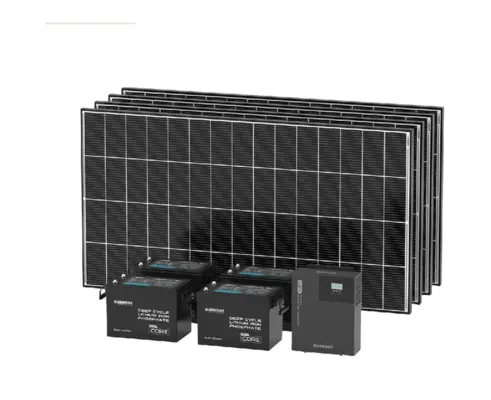
Before you buy a solar panel on sale, check five things against the gear it will connect to: the cold-weather open-circuit voltage (Voc) against your controller or power station limit, the connector type, the panel's operating voltage and current against the input window, the written warranty, and the return terms. A panel that is cheap but exceeds an input limit or does not plug in is not a deal. This checklist keeps a sale panel from becoming an incompatible one.
It pairs with the sale-day advice in our guide to power station deals. Black Friday is November 27, 2026 and Cyber Monday is November 30, but the panel checks below apply on any day.
Check 1: Voc against the input limit, corrected for cold
Voc is the voltage a panel makes with nothing connected, and it is the number that can damage a controller. Cooling a silicon cell raises its voltage, so the sticker figure is not the worst case. One controller maker's FAQ describes the limit as the maximum voltage listed in the operator manual, says exceeding it damages the controller, and tells you to calculate array voltage at the lowest temperature the system will see. A physics reference on solar cells confirms the direction: Voc rises as temperature falls. Find the maximum input voltage in your controller or station manual, then compare it with the panel's Voc after the cold correction. The panel spec decoder explains each datasheet line.
If two or more panels go in series, their Voc values add. The series versus parallel guide shows how, and the controller choice is covered in the small-build controller guide.
Check 2: Operating voltage and current against the window
Voc is the safety check. Vmp and Imp, the voltage and current at maximum power, tell you whether the panel works well with the input. Many power stations and MPPT controllers publish a working voltage range and a maximum input current or wattage. Confirm the panel's Vmp sits inside the range and that the combined current stays under the input limit. The solar input specs guide walks through a typical spec sheet.
Check 3: Connector type
Connectors cause more sale-day regret than wattage does. A panel may arrive with MC4-style connectors while your station takes a barrel plug or another brand-specific port, which means an adapter cable. Connector makers are blunt about mixing. Stäubli, the company behind the original MC4 connector, states that its connectors must not be mated with other manufacturers' connectors, warns of arcing, fire and shock, and rejects "MC4 compatible" claims. Another equipment maker allows only genuine Stäubli-to-Stäubli pairings with its products. Treat "compatible" in a listing as a claim to verify. Look for the connector brand, buy adapters from the station maker or a named supplier, and let a licensed electrician handle any permanent wiring.
Check 4: Warranty terms
A written warranty on a consumer product costing more than $15 has to be available to read before you buy, according to the Federal Trade Commission's warranty guide. Use that right. For a panel, find out what the warranty covers (defects, power output, or both), how long each part lasts, who handles a claim, and whether it applies if you buy from a seller the maker does not authorize. A full warranty cannot require you to return a registration card, but a limited one can attach conditions, so note any registration deadline.
Check 5: Size, build and return terms
- Physical fit. Measure the space and the mounting method. Flexible versus rigid panels behave differently on roofs and curved surfaces.
- Wattage versus size. A listing that shows a big wattage on a small frame with no datasheet deserves suspicion. Multiply Vmp by Imp and see if it lands near the stated watts.
- Return window. Read it on the page you buy from. Panels are bulky, so find out who pays return shipping and whether the original packaging is required.
- Datasheet access. If the maker does not publish Voc, Vmp, Imp and temperature coefficients, skip the panel.
The checklist at a glance
| Check | Where to read it | Red flag |
|---|---|---|
| Cold-corrected Voc under the limit | Panel datasheet and controller or station manual | No Voc or temperature coefficient published |
| Vmp and current inside the window | Panel datasheet and input spec | Combined current above the input rating |
| Connector matches | Listing photos, datasheet, station manual | "Compatible" with no connector brand named |
| Warranty read | Maker warranty page | Only a seller promise, no written terms |
| Return terms | Seller policy page | Restocking fees or short windows on a bulky item |
Questions to ask the seller
If a listing leaves gaps, message the seller before you buy and keep their answers. Ask for the datasheet with Voc, Vmp, Imp and the temperature coefficients. Ask which connector brand is fitted, whether the seller is an authorized dealer for the maker, and whether the warranty is honored through that seller. A clear reply is a good sign. A vague one, or none at all, is a reason to wait for another sale.
The same questions apply to used and open-box panels, with one addition: ask for the original sticker photo and a Voc reading taken in sun. A used panel with a sticker, a meter reading and a clear return window can be a fair buy. One with no sticker and no reading is a guess, and the warranty usually does not transfer.
When the panel arrives
Inspect the glass, frame and cable insulation before you sign off on delivery, and photograph the sticker. Then meter the panel in open sun with a DC meter rated for the voltage. The reading should land close to the sticker Voc in similar temperatures, and it becomes your baseline for later troubleshooting. Do this inside the return window. If a reading is far off, contact the seller before you wire anything. For flexible alternatives and compact options, the portable panel guide is the place to start.
Bottom line: Cold-corrected Voc under the input limit, Vmp and current inside the window, a connector that really mates, and a warranty you have read. Skip any sale panel that fails one of those, however big the discount. Follow the equipment manuals, and use a licensed electrician for permanent wiring.
Frequently Asked Questions
What is the most important spec to check on a sale solar panel?
Open-circuit voltage, corrected for the coldest temperature the panel will see, compared with the maximum input voltage in your controller or power station manual. Exceeding that limit can damage the controller.
Why does cold weather matter for panel voltage?
A solar cell makes more voltage as it gets colder, so the Voc on the sticker understates what the panel produces on a cold, clear morning. Use the datasheet temperature coefficient and your local low temperature when checking.
Can I use MC4-style connectors from different brands together?
The maker of the original MC4 connector says its connectors must not be mated with connectors from other makers, and some equipment makers approve only matching pairs. Check the connector brand and the equipment manual before you rely on a compatible claim.
What should I look for in a solar panel warranty?
Read what is covered (defects, output, or both), how long each part lasts, who handles claims, whether an unauthorized seller voids coverage, and whether registration is required within a set time.
Should I test a panel when it arrives?
Yes. Inspect it for damage, photograph the sticker, and meter Voc in open sun with a DC meter rated for the voltage. Do it inside the return window and keep the reading as a baseline.
Sources and verification
The voltage, connector and warranty points below come from the sources listed. Your panel datasheet and your controller or station manual are the final word on limits and compatibility.
- Morningstar FAQ: the controller Voc limit is set in the operator manual, exceeding it damages the controller, and array voltage should be calculated at the lowest expected temperature.
- PVEducation, Effect of Temperature: Voc rises as a silicon cell cools.
- Stäubli statement on PV connector product liability: its MC4 connectors are not to be mated with other manufacturers connectors.
- Tigo support article on mixing MC4 connectors: one equipment maker approves only genuine Stäubli pairings with its products.
- FTC, Businessperson's Guide to Federal Warranty Law: pre-sale availability of warranties on products over $15, and registration cards under a full warranty.
We give no limit values for specific controllers on this page because they differ by model. Read your own manual, and confirm sale dates and return terms with the seller.