Black Friday 2026 is Friday, November 27, and Cyber Monday is Monday, November 30. A power station deal is real when the exact unit you had already shortlisted is cheaper for what it stores, with a full written warranty and the accessories you need. Judge capacity, cycle life, warranty and box contents first, and treat the percentage off as the last thing you read.
The 2026 dates, and why a sale label is not a calendar
Thanksgiving falls on Thursday, November 26, 2026. That puts Black Friday the next day and Cyber Monday on Monday, November 30. Sellers pick their own start and end dates, so a "Black Friday price" tag in October or December tells you about marketing, not about the calendar. Use the two dates as reminders to re-check the models on your list, and expect listings to change, sell out or end without notice.
Shortlist first, then shop the sale
The most common bad deal is a good discount on the wrong size. Before the sales start, add up what you want to run in watt-hours using the sizing guide and the appliance wattage list. Pick two or three models that fit, and read the full buying steps in the power station buying guide. During the sale you are checking whether those models moved, not browsing for whatever has the biggest banner. Write the size, the chemistry you want and the warranty length you will accept on a note, so a flashy listing has something to be measured against.
What to compare instead of the percentage off
A percentage is calculated from a "was" figure the seller controls. These specs are not, and each one is printed on the maker's spec sheet:
| Compare | Why it beats the markdown | Where to read it |
|---|---|---|
| Rated capacity (watt-hours) | Capacity sets runtime. Outlet watts only say what you can plug in at once. | Spec sheet, plus the sizing calculator |
| Battery chemistry and cycle life | Decides how long the battery lasts under repeated use. The maker states the cycle count under its own test conditions, including what capacity counts as "end of life." | Spec sheet; see cycle life explained |
| Warranty length and terms | A long number means little if it only covers defects, or only when bought from certain sellers. | Written warranty page |
| Recharge options | Solar input limits and wall-charging speed decide whether the station is useful in an outage. | Spec sheet; see solar input specs |
| Outlets and inverter | Surge rating and outlet types decide whether your actual gear starts. | Spec sheet; see surge ratings |
| Included accessories | A solar cable or extra battery changes what you would otherwise buy separately. | Box contents list on the listing |
A quick way to compare two sale units: take the amount you would actually pay after shipping and tax, and divide it by the rated watt-hours. Do the same for the unit you were watching before the sale. The lower number per watt-hour is not automatically the better buy, but a deal that only looks good as a percentage often fails this test.
Warranty and seller: read the terms before checkout
Under the Federal Trade Commission's guide to federal warranty law, a written warranty on a consumer product that costs more than $15 has to be available for you to read before you buy it. A maker can meet that duty by posting the terms online or by giving retailers copies, so the terms should be easy to find before you pay. There is no reason to buy a battery without reading them. Look for four things: how long it lasts, whether it covers battery capacity or only outright defects, who handles repairs, and whether the coverage applies if you buy from a seller the maker does not authorize.
Registration is the other trap. The FTC guide says a full warranty cannot make you return a registration card, but a limited warranty can attach conditions. If the terms mention registering within a set period, put the date in your calendar when the box arrives.
Bundles: price the pieces
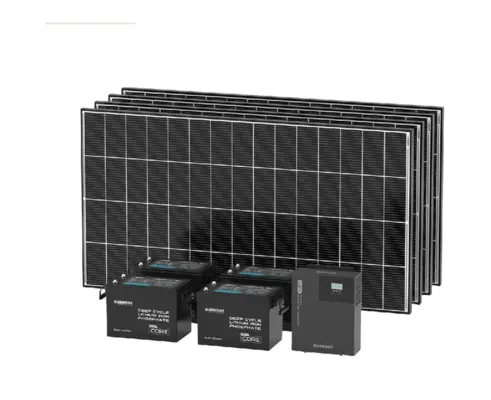
Kits with a panel, a second battery or a cart can be good value, but only if you would have bought each piece. Check the panel's voltage and connector against the station's input limits (the portable panel guide explains how), and see whether the bundled cables are the ones you need. If you must buy adapters anyway, the accessories guide covers what to look for.
Fake-sale patterns to check for
- An old list price. Compare against what you saw in October, not the struck-through number.
- A quietly swapped model. Last generation and current generation can have similar names. Match the model number, chemistry and charging speed.
- Peak watts shown as capacity. Surge or peak output is not watt-hours.
- A bundle that hides a weak piece. The headline unit is strong, the included accessory is one you would never buy.
- Coupon steps and timers. Read what has to be clipped or entered, and what the final total is before you pay.
Returns, delivery and the first week
Read the return policy on the page you buy from, not the one you assume. For a heavy item, find out how long you have, whether the window is longer for holiday purchases, who pays return shipping and whether the original box is required. Keep the packaging until you have tested the unit, and test it soon, because a return window that felt generous in November can be over by the time you first need the station. Plan for the unit to arrive before cold weather and before storm season, then run a dry run with the backup plan checklist. If a refurbished or open-box station tempts you, the refurbished versus new comparison lists the warranty questions to ask first.
Bottom line: Pick the model first, compare watt-hours, chemistry, cycle life and warranty terms, and price the bundle pieces separately. Check the seller's return policy before you pay. If the unit you shortlisted is not cheaper per watt-hour than before the sale, it is not a deal, whatever the banner says.
Frequently Asked Questions
When are Black Friday and Cyber Monday in 2026?
Black Friday is Friday, November 27, 2026, the day after Thanksgiving on Thursday, November 26. Cyber Monday is Monday, November 30, 2026. Individual sellers set their own sale start and end dates.
Is Black Friday the best time to buy a power station?
Nobody can promise that. Sales come and go, so decide on the model and size first, note what it cost before the sale, and buy only if the sale terms beat that on watt-hours, warranty and what is in the box.
How do I compare two power stations on sale?
Compare rated watt-hours, battery chemistry and cycle life, solar input limits, outlets and warranty terms from each maker spec sheet. Then divide the final price you would pay by the rated watt-hours for a like-for-like number.
Do I have to register a power station for the warranty to count?
It depends on the written warranty. Under FTC guidance a full warranty cannot require a registration card, but a limited warranty can attach conditions. Read the terms and register promptly if they mention it.
Is an open-box or refurbished power station a good sale buy?
It can be, if the listing states the warranty and the seller is clearly identified. Ask who covers repairs and how long, and compare that against the new unit before you decide.
Sources and verification
Dates and warranty rules come from the pages below. Product specs, cycle-life counts and warranty terms for any particular station come from the maker, so confirm them there.
- timeanddate.com, Cyber Monday lists Cyber Monday 2026 as Monday, November 30.
- timeanddate.com, Thanksgiving Day gives Thanksgiving as the fourth Thursday of November, which is November 26, 2026; Black Friday is the following day.
- FTC, Businessperson's Guide to Federal Warranty Law: pre-sale availability of written warranties on products over $15, and the rule on registration cards in full warranties.
We do not quote prices or discounts on this page. Return windows, warranty length and registration rules differ by seller and maker, so read them on the page where you buy.