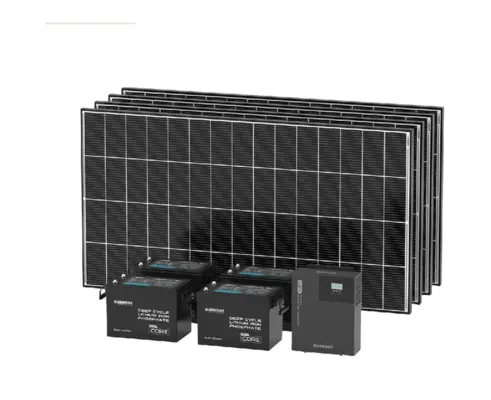
The most important number on a modern power station isn't capacity — it's cycle life, the count of full charge-discharge cycles the battery delivers before meaningfully fading. It's the number that turned these products from gadgets into decade-scale infrastructure, the reason "LiFePO4" appears in every recommendation this site makes, and the spec that decides whether your purchase is still working when its price is long forgotten. Here's what cycle life actually means, why the chemistry switch changed everything, and the habits that stretch a battery's calendar.
What a "cycle" actually is
One cycle equals one full capacity's worth of use — not one plug-in. Draining half and recharging is half a cycle; two such days sum to one. Cycle-life ratings state how many such full-equivalents a pack delivers before declining to a stated fraction of original capacity — commonly 80% — after which the battery keeps working, just smaller. That last part matters: cycle life describes graceful fade, not a cliff. A pack "past" its rating is a slightly smaller pack, not a dead one, which is why rated cycles understate real service life for most owners. The arithmetic that makes ratings tangible: a station cycled fully every single day consumes 365 cycles a year — so a rating in the low thousands means roughly a decade of daily full use, and far longer at the weekend-and-outage duty most stations actually see.
The chemistry divide: why LiFePO4 took over
The power station market ran for years on NMC lithium — energy-dense, light, and rated for hundreds of cycles — until lithium iron phosphate (LiFePO4/LFP) reached price parity and rewrote the category. LFP's trade is beautiful for this product: modestly heavier per watt-hour, in exchange for cycle ratings several times higher (thousands versus hundreds), superior thermal stability, and calmer aging. For a device whose whole job is being charged and drained for years, the trade isn't close — which is why the current generation from every major brand is LFP, why our chemistry comparison treats NMC as the shrinking exception, and why "LiFePO4" is the first checkbox in our budget guide's non-negotiables. The same chemistry powers the component batteries of our DIY battery guide — one revolution, every scale.
What actually ages a battery
Cycles are only one of two clocks; calendar aging runs alongside, driven by chemistry's quiet enemies. Heat is the big one — storage and operation in hot spaces accelerates fade regardless of use, which is why the attic and the summer car trunk are the worst homes a station can have. Sitting full stresses cells; long storage at 100% ages a pack faster than storage in the middle of its range. Sitting empty is worse — deep-discharged packs left flat can drift below recoverable voltage. Charging below freezing damages lithium chemistry outright — the one hard rule, which quality BMS units enforce with low-temperature cutoffs and heated variants solve for winter duty. Chronic fast-everything — always max-rate charging, always maximum draw — adds gentle wear that gentler habits avoid. None of these is exotic; all of them are why two identical stations can age years apart.
The longevity habits that cost nothing
The care routine falls out of the enemies list. Store at partial charge — roughly the 60–80% band — and top up before known duty rather than after every use. Cycle the battery monthly with real work (the blackout drill from our backup guide conveniently doubles as battery exercise); lithium prefers use to shelf life. House the station somewhere temperate — the closet, not the attic — and charge indoors in winter. Use fast charging when speed matters and standard rates when it doesn't. Update firmware when the app asks, because battery-management refinements genuinely land in updates. And ignore the folk rituals imported from older chemistries: no conditioning cycles, no full-drain calibrations, no fear of partial charging — modern BMS-managed LFP wants boring, shallow, temperate use, which is conveniently what most lives provide.
Accessories that protect the investment
A few modest purchases guard a decade-scale battery. A smart plug or simple outlet timer automates the partial-charge storage habit — charge windows instead of charge vigilance. A basic infrared thermometer confirms the storage spot stays temperate through summer (the attic-versus-closet difference is starkly visible in one reading). For winter-duty stations, an insulated tote or heated storage solution keeps charging above the freezing line. And for the DIY-bank crowd, the shunt-based monitor from our battery guide extends the same visibility to component systems. None of it is required; all of it is cheaper than the capacity it preserves.
Reading longevity claims when shopping
Spec-sheet fluency here is short: the cycle number matters with its retention threshold (thousands of cycles to 80% is the current LFP norm; a big number to a lower threshold is a softer claim), chemistry named explicitly beats marketing adjectives, warranty length signals the maker's own confidence in its aging curve, and BMS features — low-temperature cutoff above all — separate protective designs from hopeful ones. On the used market, the same fluency reads listings: LFP units with modest cycle counts are among the safest secondhand electronics purchases going (the logic our expansion guide applies to packs), while aging NMC-era units deserve pricing that reflects a chemistry near its cliff rather than its prime.
The honest lifespan answer
So how long do they last? A current LiFePO4 power station, kept temperate and used the way households actually use them, is realistically a decade-plus device — cycle math alone permits years of daily full use, calendar-kind habits extend it, and the graceful-fade endgame means "worn out" arrives as "a bit smaller" rather than "dead." The fair planning assumption: the electronics, ports, and your needs are all as likely to retire the unit as the battery is. That inversion — the battery outlasting everything around it — is the quiet achievement of the chemistry era, and the reason buying the right station once has replaced buying the wrong one twice.
Frequently Asked Questions
How many years does a power station battery last?
Current LiFePO4 units rated in the thousands of cycles realistically deliver a decade-plus of typical household duty — the rating alone covers years of daily full use, and lighter real-world patterns stretch far past it. Heat and storage habits move the number more than usage does.
What happens when a battery reaches its cycle rating?
Graceful fade, not failure: ratings mark decline to a stated capacity fraction — commonly 80% — after which the pack simply works smaller. Many stations serve usefully for years past their rated count.
Does fast charging hurt the battery?
Modern BMS-managed LFP tolerates its rated fast charging well; chronic maximum-rate everything adds gentle wear that occasional use doesn't. Practical rule: fast when speed matters, standard when it doesn't.
What's the best charge level for storing a power station?
The middle band — roughly 60–80% — in a temperate space, topped before expected duty and cycled with real use monthly. Long storage at full, at empty, or in heat are the three habits that visibly age packs.
Is LiFePO4 really that much better than older lithium chemistry?
For this product, decisively: several times the cycle life, better thermal stability, and calmer aging in exchange for modest extra weight. It's why the entire current generation switched, and why chemistry is the first spec to verify on any purchase.