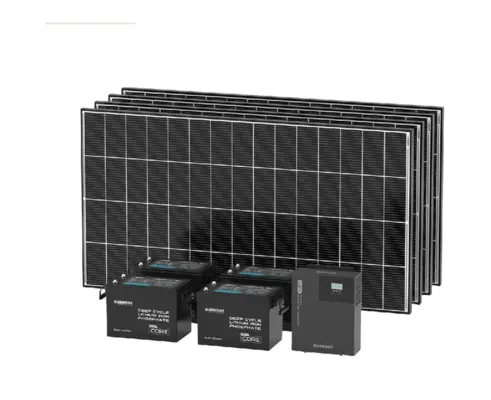
Beneath every power station spec sheet sits a chemistry decision that outweighs most of what's printed above it. The market's shift from NMC lithium to lithium iron phosphate (LiFePO4/LFP) is the quiet revolution that turned these products from three-year gadgets into decade-scale tools — and understanding the trade explains half the used market, most of the pricing tiers, and why this site's guides repeat one checkbox relentlessly. Here's the honest chemistry comparison, minus the electrochemistry lecture.
The two chemistries in plain terms
NMC (nickel manganese cobalt) is the energy-density champion — the chemistry of phones, laptops, and most EVs, packing the most watt-hours per pound and per liter. It built the first power station era: light, compact units whose batteries were rated in hundreds of cycles and aged on a curve owners could feel by year three. LiFePO4 trades a slice of that density — packs run modestly heavier and bulkier per watt-hour — for a different life entirely: cycle ratings in the thousands, superior thermal stability (the calmest major lithium chemistry), gentler calendar aging, and steadier behavior at high draw. For a product whose job is being charged, drained, and stored for years, the trade is so lopsided that the entire current generation converted — the shift our cycle-life explainer covers from the longevity side.
Head to head
| LiFePO4 (LFP) | NMC | |
|---|---|---|
| Cycle life | Thousands of cycles | Hundreds of cycles |
| Weight per Wh | Heavier (modestly) | Lighter — the one real win |
| Thermal stability | Excellent; the calm chemistry | Good with management; less margin |
| Calendar aging | Gentle | Noticeable by mid-life |
| Cold-charging rule | No charging below freezing | Same lithium limitation |
| Where it lives in 2026 | The entire current generation | Older models, used market, ultralight niches |
What the trade means in practice
For home backup and daily-duty stations, LFP wins without argument. The weight penalty is irrelevant for a unit that lives in a closet, while the cycle multiple decides whether the purchase survives its warranty by years or by a decade — the arithmetic behind the non-negotiables in our budget guide and the platform bets in our home backup guide. For genuinely weight-critical missions — backpack-portable power, gram-counted overlanding — NMC's density retains a real argument, which is why it persists in ultralight power banks and a few portability-first products. For the used market, chemistry is the first question: a lightly cycled LFP unit is among the safest secondhand electronics buys going, while an NMC-era station at mid-life sits near its fade curve's steep section and should be priced like it. The listing that doesn't name its chemistry has answered the question anyway.
The shared rules (and the myths)
Both chemistries share lithium's fundamentals: no charging below freezing (BMS-enforced on quality units, solved by heated variants), a preference for partial-charge storage over sitting full or empty, and dislike of heat — the habits from our cycle-life guide apply across the divide. And both deserve rescue from lead-acid-era folklore: no memory effect, no conditioning rituals, no full-drain calibrations; modern BMS-managed packs of either chemistry want boring, shallow, temperate use. The myths worth retiring in the other direction: NMC is not "dangerous" — billions of well-managed cells prove otherwise — and LFP is not "too heavy to move"; the penalty on a station is pounds, not a lifestyle. The chemistries differ in lifespan economics, not in whether they work.
Buying with chemistry eyes
New purchases in 2026 are simple: LFP is the floor, named explicitly on the listing — "lithium" without a surname at this point usually means older chemistry or older stock, priced accordingly or avoided. Where NMC still appears legitimately (ultralight gear, clearance on last-generation models), buy it knowingly: the discount must be real, the mission genuinely weight-bound, and the ownership horizon honest. And whichever chemistry, the surrounding checklist from our guides — pure sine output, real solar input, a BMS with low-temperature cutoff, a reachable warranty — separates the products built around their cells from the ones merely containing them. Chemistry sets the ceiling; the BMS and your habits decide how much of it you get.
One market note worth banking: as LFP consolidated the category, NMC-era units flooded the clearance and used channels at prices that look tempting beside current stickers. Occasionally they genuinely are — for short-horizon missions, loaner duty, or teardown projects. But priced within reach of a current LFP promotion, yesterday's chemistry is no bargain at all; it's a countdown clock with a discount sticker.
Bottom line
LiFePO4 for essentially everything a power station does, NMC only where every ounce genuinely counts, and chemistry named explicitly on anything you buy new or used. The revolution already happened — the only mistake left is paying current prices for the previous era's cells.
Frequently Asked Questions
Is LiFePO4 always better than NMC for power stations?
For stationary and household duty, effectively yes — several times the cycle life and calmer aging for a modest weight penalty that closet-dwelling units never feel. NMC's density advantage matters only in genuinely weight-critical gear.
How much heavier is a LiFePO4 power station?
Modestly — the chemistry carries a real but small penalty per watt-hour, amounting to pounds on a typical station. Against a cycle-life multiple measured in thousands versus hundreds, it's the cheapest weight anyone ever carried.
Are old NMC power stations worth buying used?
Only at prices honest about the fade curve: NMC units at mid-life sit near their steep decline, while lightly cycled LFP units are among the safest used-electronics buys. Chemistry is the first question to ask any listing.
Do LiFePO4 batteries have any downsides?
Weight and bulk per watt-hour, plus lithium's universal no-charging-below-freezing rule — solved by heated variants and indoor placement. For power station duty the downsides list is genuinely that short.
How can I tell which chemistry a power station uses?
Quality makers name it prominently — LiFePO4/LFP is a selling point. Vague 'lithium-ion' labeling on new products, or any silence on chemistry in used listings, is itself the answer: assume older NMC and price or pass accordingly.