Somewhere between the camping power station and the professionally installed wall battery sits the category that's actually right for most households: serious home battery backup you can buy, own, and deploy yourself. Multi-kilowatt-hour capacity, surge-capable inverters, expansion paths, transfer-switch options — the Tier 3 territory of our backup power guide, where the refrigerator runs continuously, the furnace fan comes back, and outage life resembles ordinary life. Here's the field in 2026 and how to build into it.
What separates home backup from big camping gear
Four capabilities define the class. Sustained output — running a household's baseline (refrigeration, furnace fan, sump pump, lights, electronics) continuously, with surge headroom for compressor starts. Expandable capacity — because outage length is the variable you can't control, the battery must grow (the platform logic from our expansion guide). Meaningful solar input — a multi-kilowatt-hour bank behind a small input ceiling can't refill fast enough to matter across a multi-day event; the input spec is the silent differentiator. Home integration — transfer switches and subpanel kits that feed selected circuits directly, replacing the extension-cord octopus with rooms that simply work. Systems earning all four stop being appliances and start being infrastructure. Tiers are $/$$/$$$; no invented specs or reviews.
Quick comparison
| System class | Tier | Architecture | Best for |
|---|---|---|---|
| Bluetti expandable flagship class | $$$ | Host + stackable packs | Grow-as-you-go home backup |
| EcoFlow DELTA Pro class | $$$ | Host + packs + panel integration | Fast-recharge households |
| Anker SOLIX F-series class | $$$ | Expandable towers | Compact-footprint capacity |
| Renogy fixed system (inverter + bank) | $$–$$$ | Permanent component install | Whole-building independence |
| Transfer switch / subpanel add-on | $$ | Integration layer | Any system graduating to circuits |
The picks
Bluetti expandable flagship class
$$$The grow-as-you-go reference: flagship hosts accepting stacked B-series packs into genuinely large capacity, surge-capable inverters that start compressors and well pumps, strong solar input ceilings, and home-integration options at the top of the line. The platform structure means Tier 2 money starts the system and Tier 3 arrives one pack at a time — the buying pattern this site recommends most.
EcoFlow DELTA Pro class
$$$The turnaround specialist: flagship capacity with the ecosystem's signature rapid recharge — from wall power between outage waves, from generous solar input during them. Deep app control, expansion packs, and integration accessories including transfer-switch pathways. The pick where outages arrive in clusters and refill speed is the difference-maker.
Anker SOLIX F-series class
$$$The tidy tower: Anker's large expandable systems stack capacity in a compact vertical footprint with the brand's app polish and charging pedigree. A strong fit for homes where the utility corner is small but the backup ambition isn't.
Renogy fixed system: inverter-charger + LiFePO4 bank
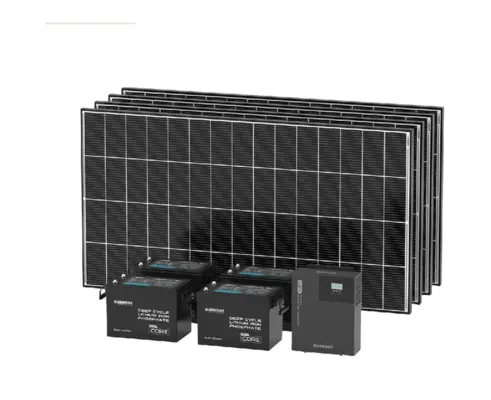
$$–$$$The permanent route: a wall-mounted inverter-charger, a component LiFePO4 bank sized to the building, and a rooftop array — the architecture behind our complete off-grid system review, scaled to taste. More installation, more capacity per dollar, and the path that ends at whole-building independence rather than a bigger appliance.
Transfer switch / subpanel integration kit
$$The graduation layer for any system above: an interlock or transfer switch feeding a critical-loads subpanel converts extension-cord backup into circuits that simply come back. Electrician territory for the panel work — money better spent than on any capacity upgrade, because integration is what makes backup invisible.
The accessory layer
$The completers every Tier 3 build wants: heavy-gauge cords for the pre-integration phase, a kill-a-watt-style meter to measure your actual loads before sizing anything, surge protection for the sensitive electronics riding the system, and a battery-state placard so the household can read the tank at a glance.
Sizing Tier 3 with real numbers
Measure before buying — the watt-meter weekend is the highest-value step in the whole process. Meter the refrigerator, freezer, furnace fan, sump pump, and office loads across a normal day, sum the daily watt-hours of the must-runs, and confront the surge demands of the compressor loads. Most households discover their essential baseline is smaller than feared — a few kilowatt-hours daily — which reframes the purchase: a flagship host plus one expansion pack covers a day-plus of essentials, and a serious solar input keeps the cycle running across longer events. The classic errors both come from skipping the measurement: buying double the needed capacity with half the needed solar input, or buying an inverter that runs everything except the one pump that mattered.
The outage playbook: running the house on battery
Hardware is half the system; the playbook is the other half. When the grid drops: deploy or verify the transfer within the first minutes, then walk the load plan — refrigeration first and continuously, heat or cooling in managed windows rather than around the clock, high-draw appliances (kettle, microwave, hair dryer) one at a time and briefly, and everything else freely, because electronics and lights are rounding errors. Start the solar refill loop at first light, not when the battery complains. Check state of charge on a schedule — morning and evening — rather than anxiously, and let the placard math from your drill days answer "how long can we go." Households that run this playbook stretch the same hardware two and three times further than households that don't, which is the cheapest capacity upgrade in this entire guide.
Integration: the difference between backup and comfort
Extension-cord backup works; circuit backup disappears. The integration path runs in stages: start with the cord phase and learn which loads matter, add an interlock or transfer switch with a critical-loads subpanel once the system proves itself, and let an electrician handle the panel work — it's a modest job priced against the system it completes. Households that integrate report the same thing: the outage stops being an event. The furnace clicks back on, the kitchen works, the office continues, and the only tell is the utility's apology text. That's the actual product this category sells — not watt-hours, but continuity — and it's why the integration money outranks the next capacity tier on every build list we publish.
Financing the build: staging beats splurging
Tier 3 money doesn't have to arrive at once, and the staged path outperforms the splurge anyway. Season one: the flagship host and one panel — full Tier 2 capability, drill it, learn the loads. Season two: the expansion pack and second panel, arriving informed by season one's real numbers. Season three: the transfer switch and subpanel, converting the proven system into invisible infrastructure. Each stage delivers complete protection at its level, nothing gets discarded, and the promotion cycles the majors run between seasons routinely fund a stage's discount. The households that regret their backup purchases are almost always the ones that bought everything in a storm-panic week; the ones that staged it own systems shaped exactly like their lives.
Bottom line
Measure your real loads, buy an expandable platform with solar input matched to its capacity, and spend the graduation money on integration before more battery. Bluetti's stack architecture is the reference grow-path, EcoFlow the refill champion, and the Renogy component route the permanent endgame. Build it once, drill with it twice a year, and the next blackout becomes a text message instead of an emergency — the utility's apology arriving on a phone charged by the system that made the apology irrelevant.
Frequently Asked Questions
How big a battery do I need to back up my house?
Essentials-only backup — refrigeration, furnace fan, lights, electronics, a pump — typically runs on a few kilowatt-hours per day, pointing at a flagship host plus one expansion pack with solar refill. Whole-home comfort scales from there. Measure your loads with a watt meter before sizing; guesses run large.
Can these systems run a furnace or well pump?
The flagship class handles furnace fans readily; well pumps depend on their surge demand, which varies widely — check your pump's startup draw against the inverter's surge rating before relying on it. This is the spec that separates the home-backup class from camping gear.
Do I need an electrician for home battery backup?
Not for the extension-cord phase. Transfer switches, interlocks, and subpanel work — the integration that makes circuits come back automatically — is licensed-electrician territory, and worth every dollar of the modest job.
Is DIY home backup cheaper than a professionally installed wall battery?
Substantially, for comparable essential-circuit coverage — and it's portable, expandable, and yours without contracts. Professionally installed systems counter with whole-home seamlessness and permitted grid interconnection. Many households run the DIY tier for years and never feel the gap.
How fast can solar actually recharge a big home battery?
It's governed by the system's solar input ceiling — the spec to check before buying. Flagship systems with serious input paired to adequate panel wattage recover a meaningful fraction of capacity per sunny day, which is what makes multi-day outage coverage realistic.