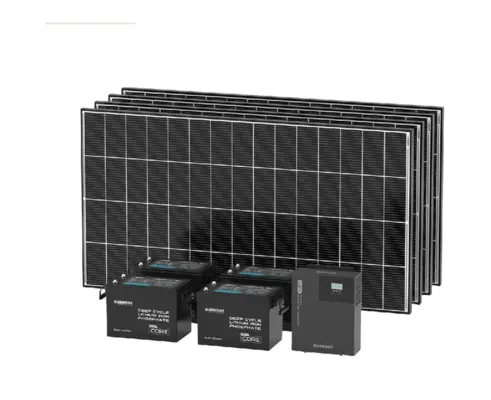
The smartest thing the power station industry did this decade was make capacity modular. Instead of buying the biggest unit you might ever need, you buy the inverter head that fits today and stack expansion batteries as life demands — a bigger storm season, a new home office, a medical device, an off-grid ambition. Expansion batteries are how a weekend camping unit becomes a partial-home backup system without discarding a dollar of the original purchase. Here's how the expansion ecosystems compare and how to buy into one wisely.
How expansion actually works
An expansion battery is capacity without a brain: a LiFePO4 pack that connects to a compatible host station's dedicated port, letting the host's inverter, screen, and app treat the combined capacity as one tank. The host still sets the rules — output wattage, solar input ceiling, how many packs it accepts — which is why the expansion decision is really a platform decision made on day one. A station that accepts two expansion packs triples your ceiling; one with no expansion port caps you at the sticker forever. The packs themselves usually can't run loads alone (no inverter), though several brands' packs include DC ports for basic direct duty. Chain cables, stacking form factors, and app integration vary by ecosystem; capacity-per-dollar on expansion packs typically beats buying a second standalone station, which is the economic point of the whole architecture.
Choosing the platform before the pack
Since packs are captive to their brand's hosts, evaluate ecosystems on four axes. Expansion ceiling: how many packs the host you're eyeing actually accepts, and what the total system capacity becomes. Chemistry and cycle life: LiFePO4 across the board in the current generation — verify on older or budget hosts (our cycle-life explainer covers why it matters). Solar recharge at scale: a big battery bank behind a small solar input ceiling refills too slowly to matter in a long outage; the host's input spec is the bottleneck to check. Home integration: the flagship ecosystems increasingly offer transfer-switch and subpanel options, which is where a stacked system graduates into true partial-home backup — the Tier 3 pattern from our backup power guide. Tiers are $/$$/$$$, no invented specs or reviews.
Quick comparison
| Ecosystem | Tier | Expansion pattern | Best for |
|---|---|---|---|
| Bluetti B-series packs | $$–$$$ | Stackable modules, deep lineup | Scaling to serious home backup |
| EcoFlow DELTA extra batteries | $$–$$$ | Per-model packs, fast recharge hosts | DELTA owners, wave outages |
| Jackery expansion packs | $$ | Simple pairing, current models | Explorer households |
| Anker SOLIX expansions | $$ | Stack-under design | Compact footprint scaling |
| Goal Zero Yeti ecosystem | $$$ | Tank/link accessories | Established Yeti systems |
| DIY LiFePO4 route | $–$$ | Component batteries + your build | Tinkerers, maximum Wh/$ |
The picks
Bluetti B-series expansion packs
$$–$$$The deepest expansion bench in the category: multiple pack sizes pairing across Bluetti's host lineup, stacking toward multi-kilowatt-hour systems with home-integration options at the top. Buying the host with the B-series roadmap in mind is the cleanest 'grow into it' path in portable power — and the pattern our backup guide's Tier 2-to-3 strategy assumes.
EcoFlow DELTA extra batteries
$$–$$$EcoFlow's per-model packs bolt capacity onto the DELTA family, with the ecosystem's signature fast wall recharge keeping the whole stack turnaround-friendly when outages come in waves. App integration presents the stack as one clean tank. Verify pack-to-host model matching before buying — packs are model-family specific.
Jackery expansion packs
$$Jackery's current-generation Explorer hosts added the expansion story the brand long lacked — simple pairing, familiar interface, LiFePO4 throughout. The friendly pick for households already in the ecosystem who want more nights without more complexity.
Anker SOLIX expansion batteries
$$Anker's stack-under design keeps the footprint of a growing system tidy — packs sit beneath the host as one column, which matters in apartments and closets. Solid app presentation and the brand's charging pedigree. A strong compact-space scaling route.
Goal Zero Yeti ecosystem
$$$The veteran ecosystem: Yeti hosts with tank-style expansion and link accessories, long favored in the overlanding and van world. Priced at the premium end, with the payoff of a mature accessory catalog and years of field history. Most sensible for keepers already invested in Yeti gear.
DIY route: component LiFePO4 + your build
$–$$The tinkerer's answer from our DIY Solar Generator project: server-rack-style or drop-in LiFePO4 batteries plus your own inverter and wiring deliver the most watt-hours per dollar in this article — at the cost of building and owning the system yourself. Our LiFePO4 battery guide covers the component picks; the projects page covers the build.
Sizing the stack honestly
The right stack size falls out of the same three questions as every backup decision: real outage length, must-run loads, and refill rate. A worked example makes it concrete: a household whose must-runs average a modest continuous draw through a day consumes a few kilowatt-hours daily — one host plus one large pack covers a day and change with margin, and a 400W-class solar input recovers a meaningful fraction each sunny day, stretching the system across a multi-day event. Stacking a third pack without upgrading solar input, by contrast, just deepens a tank you can't refill — the classic oversizing error. Balance the three legs (capacity, output, input) and the stack earns its price; grow one leg alone and you've bought a bigger countdown timer.
Living with a stacked system
Placement and habits matter more as systems grow. Keep the stack ventilated and off concrete-cold floors; LiFePO4 tolerates wide conditions but charges only above freezing, so garages in winter climates want the heated-pack options or an indoor home. Store the system at partial charge (around 60–80%) between duties, cycle it with real use monthly — peak-shaving, workshop days, the blackout drill — and update firmware when the app asks, because battery-management refinements are real. Label the cables and rehearse the deployment: a stacked system that takes twenty minutes and a manual to bring online during a storm wasn't finished being installed. Done right, the stack simply lives where the outage will need it, full and silent, doing useful work in between.
The used-market angle
Modularity created something the portable power world never had before: a rational used market. Because packs are dumb capacity and hosts carry the electronics, a used expansion pack is a far safer secondhand purchase than a used all-in-one station — fewer failure points, and LiFePO4's long cycle life means a lightly used pack has most of its service ahead of it. The checks that matter: confirm exact model compatibility with your host (family matters, not just brand), ask for a photo of the pack's cycle count or health screen where the ecosystem exposes one, inspect the expansion port and cable for corrosion or bent pins, and test a full connect-charge-discharge cycle before money changes hands where possible. Selling works the same way in reverse — keeping boxes and cables makes packs genuinely liquid assets when you upgrade ecosystems. It's an underrated virtue of the platform era: capacity you can buy used, grow gradually, and resell, in a category that used to be all-or-nothing purchases depreciating on a shelf. The platform era rewards patience twice — once when you buy, and again every time you grow.
Bottom line
Pick the ecosystem before the pack, size the stack to your real outage math, and grow capacity, output, and solar input together rather than capacity alone. Bluetti's B-series offers the deepest scaling path, EcoFlow the fastest turnaround, and the DIY route the best raw economics for builders. The modular era's promise is real: buy once, grow forever, discard nothing.
Frequently Asked Questions
Can I use an expansion battery from a different brand?
No — expansion packs are proprietary to their brand's compatible host models, and usually to specific model families within a brand. The cross-compatibility check happens before purchase, which is why the platform decision comes first.
Can an expansion battery work by itself?
Generally not for AC loads — packs lack inverters and depend on a host. Several brands' packs include DC ports for basic direct duty, but the design intent is capacity behind a host station.
Is an expansion pack better than a second power station?
Usually — packs deliver more watt-hours per dollar (no duplicated inverter and electronics) and integrate as one system. A second standalone station wins only when you genuinely need power in two places at once.
How many expansion batteries can I add?
It varies by host model — each publishes its maximum pack count and total system capacity. Check that ceiling before buying the host if serious scaling is the plan; it's the spec that defines your growth path.
Do expansion batteries charge from solar too?
They charge through the host, so the host's solar input ceiling governs the whole stack's refill rate. That's why matching solar input to total capacity is the key sizing discipline for stacked systems.