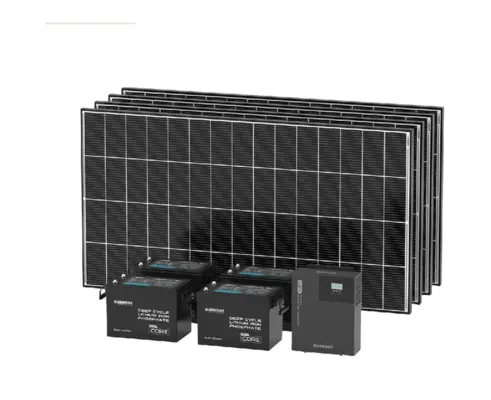
The solar pergola is the rare project where the panel gets to be the architecture. Bifacial panels — glass on both faces, harvesting direct sun above and reflected light below — double as roofing that pays rent: shade by day, dappled light underneath, and a harvest feeding string lights, a power station, or the whole backyard's electrical life. Our solar pergola build covers the structure; this guide covers the panels that belong on top, and the honest math of rear-face harvest.
Why bifacial fits overhead builds
Bifacial's bonus face earns its premium only when light actually reaches it — which is precisely what a pergola provides. Mounted overhead with open sides and a bright surface below (pale pavers, light gravel, a deck), the rear face collects reflected light all day, adding a meaningful bonus over an equivalent mono-facial panel; over dark mulch or grass the bonus shrinks toward single digits. The frameless glass-glass construction brings second-order virtues that matter more overhead than anywhere: the dappled light transmitted between cells is the pergola aesthetic people actually want (full blackout panels make a cave; bifacial makes shade), glass-glass laminates carry longer durability expectations than backsheet panels, and the symmetric look reads as intentional architecture rather than equipment. The tradeoffs: more weight per panel than backsheet equivalents — the structure must be designed for it — and a price premium that the rear-face math must justify.
Buying bifacial well
The panel specs that matter overhead: bifaciality factor (the rear face's output as a share of the front's — higher is better, and honest brands publish it), frame versus frameless (framed bifacials mount with standard hardware; frameless glass-glass wants purpose clamps and gentler handling), transparency pattern (cell spacing sets the light-below character — see a photo of the underside before committing the whole roof), and weight per panel against your beam design. Electrically they're ordinary panels: MC4 connectors, standard controller compatibility, series strings like any array — the charge-controller half follows the same rules as every fixed install on this site. Tiers are $/$$/$$$; no invented specs or reviews.
Quick comparison
| Panel class | Tier | Construction | Best for |
|---|---|---|---|
| Renogy bifacial 220W class | $$ | Framed glass-glass | The standard pergola roof |
| Rich Solar bifacial class | $$ | Framed | Value alternative, larger formats |
| Large-format residential bifacial | $$ | Framed, 400W+ class | Big pergolas, fewer seams |
| Frameless glass-glass panels | $$$ | Frameless | Design-first canopies |
| Portable bifacial (EcoFlow 220W class) | $$$ | Folding | Testing the concept, patio-adjacent |
| Mounting & wiring kit | $ | — | Every build above |
The picks
Renogy bifacial 220W class
$$The pergola default: framed bifacial panels from the DIY reference brand, sized so common pergola bays take them cleanly, with the framed construction that accepts standard mounting hardware and survives amateur installation. Pairs natively with the Renogy controllers and batteries the rest of your system likely already uses — the path of least resistance to a roof that harvests.
Rich Solar bifacial class
$$The strong value alternative: Rich Solar's bifacial line covers similar formats at competitive prices with a solid DIY-community reputation. Worth cross-shopping against Renogy on the day's pricing and the format your bay spacing wants — the two brands bracket the sensible middle of this category.
Large-format residential bifacial (400W+ class)
$$The big-canopy route: full-size residential bifacial modules mean fewer panels, fewer seams, and better dollars per watt for pergolas designed around their dimensions. The catch is handling — these are two-person panels demanding a structure engineered for their weight and wind loading from the start. The right call for new builds; rarely for retrofits.
Frameless glass-glass panels
$$$The design-first tier: fully frameless laminates whose clean edges and uniform transparency make the most architectural canopies — the panels that make guests ask who designed the roof. They demand purpose-made clamps, careful edge handling, and a premium budget. When the pergola is the showpiece, this is the glass for it.
Portable bifacial (EcoFlow 220W class)
$$$The toe-in-the-water: a folding bifacial deployed over the patio's bright pavers demonstrates the rear-face bonus and feeds a power station today, no construction required — the same panel our portable panel guide recommends for reflective ground. If the experiment convinces you, the fixed roof above awaits; if not, you own a superb camping panel.
Mounting & wiring completion kit
$The unglamorous half of every canopy: purpose clamps or through-frame hardware rated for overhead duty, UV-rated cable management along the beams, a proper junction path down a post, MC4 tooling, and the drip-loop discipline that keeps water out of connectors. Overhead installs punish shortcuts with drips and rattles; the kit prevents both.
Designing the harvest side
Treat the pergola as the small fixed array it is. Wire bays in series strings sized to your charge controller's voltage window, route home-runs down one post to the controller-and-battery station — a weatherproof box on the post or a run to the nearby shed, exactly the architecture of our workshop guide — and land the harvest wherever it works hardest: a battery bank running the yard's lighting and outlets, or a power station's solar input, which turns the pergola into the daily charger for the household backup system from our backup guide. Boost the rear face deliberately: pale gravel, light pavers, or a reflective deck finish under the canopy is the cheapest capacity upgrade in this article. And mind the shade you're creating — the seating area wants it; the panels don't, so keep the canopy clear of the trees that will own the sky in five summers.
Living under the array
A season of ownership settles the questions renders can't. The dappled light below reads brighter than people expect — genuine shade with a living pattern, not gloom — and rain on glass overhead is louder than shade cloth but softer than metal roofing, a texture most owners come to like. Snow slides off the smooth faces readily at pitch, though the melt line drips where cloth never did, so furniture placement learns the eaves. Maintenance amounts to hosing pollen off the top faces a few times a season (the rear faces self-clean surprisingly well) and an annual walk of the clamps and connectors. And the harvest becomes weirdly visible domestic weather: the string lights that never need thinking about, the power station that's simply always full, the yard that quietly stopped borrowing electricity from the house. Structures that make their own power change how you use them — mostly by letting you stop noticing.
Structure, safety, and the neighbors
Panels are roofing here, and roofing has rules. Design beams and posts for the panel weight plus your region's wind and snow loads — glass-glass modules are heavier than the shade cloth the pergola plans assumed — and bolt, never rely on gravity, because an overhead panel is a sail in the wrong gust. Ground the array per the controller manufacturer's guidance, fuse the string, and put the disconnect where hands can reach it. Permitting varies: detached pergolas under local size thresholds often sail through, but electrical inspection expectations differ by jurisdiction, and a call to the building department before the concrete pour is cheaper than any conversation after it. HOAs read "solar pergola" more kindly than "panel rack" — bring the underside photo showing the dappled light, and the aesthetics usually argue your case for you.
Bottom line
Renogy or Rich Solar framed bifacials for the standard build, large-format modules for canopies designed around them, frameless glass for the showpiece, and a bright surface below whichever you choose. Engineer the structure for the weight, wire it like the small array it is, and the pergola stops being a shade purchase and starts being the prettiest power plant on the block.
Frequently Asked Questions
How much extra power does bifacial really add?
Over bright reflective surfaces — pale pavers, light gravel, white decking — the rear face adds a meaningful double-digit bonus; over grass or dark mulch it shrinks toward negligible. The surface below the canopy is as much a component as the panel above it.
Can regular panels be used on a pergola instead?
Structurally yes, and cheaper — but standard opaque panels make full-blackout shade and an equipment-rack look. Bifacial's transmitted dappled light and symmetric glass construction are what make the canopy read as architecture; that's what the premium buys.
How much weight do bifacial panels add to a pergola?
Glass-glass modules run meaningfully heavier than shade cloth or polycarbonate — enough that beams, posts, and footings must be designed for the load plus wind and snow. Get the structural math right before ordering panels; retrofits onto light-duty pergolas are where this project goes wrong.
Do I need a permit for a solar pergola?
Often two questions in one: the structure (detached pergolas under local thresholds frequently skip permits) and the electrical (expectations vary widely). A short call to your building department before building answers both for your jurisdiction — worth it every time.
What can a solar pergola actually power?
A typical multi-panel canopy harvests enough daily to run the yard's lighting and outlets with margin, keep a household power station topped as its daily charger, or feed a small battery bank for the patio's electrical life. Size the string to the mission with our sizing calculator.