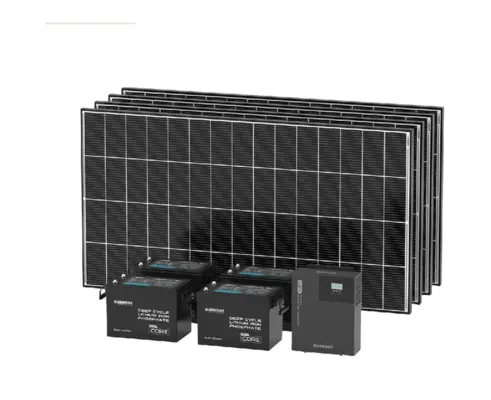
The LiFePO4 battery is the component that made DIY solar grow up. Lead-acid's tyranny — half-usable capacity, careful charging rituals, replacement every few years — ended the moment lithium iron phosphate hit accessible prices, and the DIY world reorganized around it overnight. Today the component battery is the heart of every serious build on our projects page: the rolling DIY solar generator, the workshop bank, the whole-cabin system. Here's how to buy the chemistry well, and which batteries anchor which builds.
Why LiFePO4 won
Four properties ended the debate. Cycle life: thousands of full cycles against lead-acid's hundreds — a battery cycled daily lasts a decade instead of a couple of summers (our cycle-life explainer unpacks the numbers). Usable capacity: LiFePO4 delivers essentially its whole rated capacity without harm, where lead-acid punishes discharge past half. Weight: a fraction of lead for the same usable energy, which is why every portable build converted instantly. Stability: the iron-phosphate chemistry is the calm member of the lithium family — thermally stable, tolerant, and the reason it's the chemistry trusted indoors. The one genuine limitation: charging below freezing damages cells, which is why cold-climate builds want heated batteries or indoor placement — a solved problem, but a real one to solve.
The anatomy of a good battery
Every LiFePO4 battery is cells plus a BMS — the battery management system that balances cells, enforces limits, and protects against the faults that ruin packs. The BMS is where quality lives: continuous current rating (it caps what your inverter can draw — the spec that decides whether the table saw starts), low-temperature charge cutoff (the freezing protection above), Bluetooth monitoring (a luxury that becomes a necessity the first time you diagnose anything), and balancing quality that shows up as longevity. Form factors sort by build: drop-in 12V batteries (the classic group-size boxes) suit rolling builds and small banks; server-rack batteries (rack-mount units, usually 48V) stack into serious home and cabin banks with the best price per watt-hour in the category; heated variants of both solve winter. Tiers are $/$$/$$$; no invented specs or reviews.
Quick comparison
| Battery class | Tier | Form | Best for |
|---|---|---|---|
| Renogy 12V LiFePO4 (core/Bluetooth/heated) | $$ | Drop-in 12V | Rolling builds, workshop banks |
| Battle Born 12V | $$$ | Drop-in 12V | Buy-once premium, support pedigree |
| EcoWorthy / value 12V tier | $ | Drop-in 12V | Budget builds, first banks |
| Server-rack 48V class | $$ | Rack unit | Home/cabin banks, best Wh/$ |
| Heated 12V variants | $$ | Drop-in 12V | Winter outbuildings, vehicles |
| Mini 12V (small Ah) class | $ | Compact | Lights, gates, small projects |
The picks
Renogy 12V 100Ah LiFePO4 (and Bluetooth/heated variants)
$$The DIY reference: the 100Ah drop-in that anchors more first builds than any other battery, from the brand whose panels and controllers it pairs with natively. The lineup's Bluetooth and self-heating variants cover monitoring and winter without third-party workarounds. The default heart of our DIY solar generator build and the workshop banks in the shed guide.
Battle Born 12V 100Ah
$$$The premium American benchmark: assembled and supported in the US with a long warranty and a reputation built in the unforgiving van and marine worlds. You pay a real premium over the value tier for the support pedigree and resale trust — the buy-once pick for builds where the battery is the last thing you want to think about.
EcoWorthy / value 12V tier
$The budget floor done honestly: value-brand 100Ah drop-ins with functional BMS protection at prices that make first banks and experimental builds low-stakes. Expect simpler BMS features, shorter warranties, and mixed QC as the tradeoffs — and check for low-temp cutoff specifically, which the cheapest units sometimes skip.
Server-rack 48V class
$$The serious-bank pattern: rack-mount 48V units stacking into multi-kilowatt-hour home and cabin systems at the best price per watt-hour in DIY solar. The natural partner to 48V inverter-chargers in permanent installs — the component route behind the fixed systems in our home backup guide. Needs a rack or shelf plan and a 48V-native design, both features rather than bugs at this scale.
Heated 12V variants (any reputable brand)
$$The winter answer: internal heating pads that condition cells before charging, letting garages, sheds, and vehicles charge safely through freezing weather. The modest premium over standard packs is cheap against the alternative — a BMS that spends winter refusing charge, or a cheap pack without cutoff quietly damaging itself.
Mini 12V class (small Ah)
$The small-projects tier: compact LiFePO4 packs for gate openers, lighting circuits, tool-charging caddies, and the pint-size builds on our projects page. The same chemistry advantages at pocket scale — and a painless way to learn the ecosystem before the big bank.
Bank design: the rules that keep it boring
Paralleling batteries multiplies capacity; series stacks voltage — and both have manners. Match batteries in a bank (same model, same age, ideally same purchase) so the BMS units share load evenly; mixing old and new packs makes the old one the bottleneck and the new one the workhorse. Confirm the manufacturer's published limits for series and parallel counts before designing around them — they vary meaningfully. Fuse every battery and every major branch, size wiring for the inverter's worst appetite (the classic undersize failure from our workshop guide applies doubly to banks), and add a shunt-based battery monitor: BMS Bluetooth tells you about one battery, the shunt tells you about the system, and the difference is what you'll actually consult daily. Finally, mount banks ventilated, restrained, and off cold slabs — LiFePO4 asks little, but it asks that.
Charging LiFePO4 right
The chemistry forgives almost everything except the wrong charger. Lead-acid charge profiles — equalization phases especially — don't belong anywhere near lithium; use a charge controller or charger with a LiFePO4 profile (every modern MPPT controller offers one) and set the parameters the battery maker publishes rather than folklore numbers. Two habits stretch lifespan further: avoid parking the bank at 100% for weeks — storage around the middle of the range is kinder, exactly as our cycle-life explainer details — and keep charge rates within the BMS's published limits even when the charger could push harder, because gentle charging is free longevity. Solar systems get this right almost by accident: the daily cycle of harvest and use is close to the chemistry's happy place, which is one more quiet reason LiFePO4 and DIY solar were made for each other.
Matching battery to build
The builds on this site map cleanly onto the classes. The rolling DIY solar generator wants one or two drop-in 100Ah units — weight and toolbox geometry decide. The workshop bank from the shed guide starts at one 12V drop-in and grows in parallel, or jumps straight to a small 48V rack setup if the shop's ambition is obvious. Cabin and partial-home systems belong to the server-rack class from the start — the per-watt-hour economics compound at scale, and 48V wiring stays saner at high power. And every winter-exposed build takes the heated variant question seriously at purchase, not at the first cold snap. Buy the class the build's endgame wants; the chemistry will outlast your plans either way.
Bottom line
Renogy's drop-ins for the standard builds, Battle Born where premium support earns its price, server-rack 48V for the serious banks, heated variants wherever winter lives, and the value tier for low-stakes learning — all of it fused, matched, monitored, and kept above freezing on charge. The battery used to be the compromise at the heart of DIY solar; LiFePO4 made it the component you trust most.
Frequently Asked Questions
How long do LiFePO4 batteries actually last?
Thousands of full cycles — a daily-cycled bank realistically serves a decade or more, and lightly used banks longer still. Depth of discharge, temperature, and charge quality nudge the number, but the chemistry's longevity is the reason DIY solar standardized on it.
Can I mix LiFePO4 with my old lead-acid batteries?
No — the chemistries charge differently and a mixed bank serves neither well. Replace the bank as a unit, and enjoy retiring the lead-acid rituals along with the weight.
What does the BMS actually do?
It's the pack's guardian: balancing cells, enforcing current and temperature limits, and disconnecting on faults. BMS quality — continuous current rating, low-temp cutoff, monitoring — is the real difference between battery tiers, more than the cells themselves.
Can LiFePO4 batteries be used in cold weather?
They discharge fine well below freezing but must not charge below it — that's the chemistry's one hard rule. Heated variants and indoor placement solve winter; a low-temperature charge cutoff in the BMS is the non-negotiable backstop.
Is a server-rack battery better than 12V drop-ins?
For large fixed banks, usually — better price per watt-hour, cleaner stacking, and 48V wiring efficiency at high power. Drop-ins win for portable builds, small banks, and 12V-native systems. The build's endgame picks the form factor.