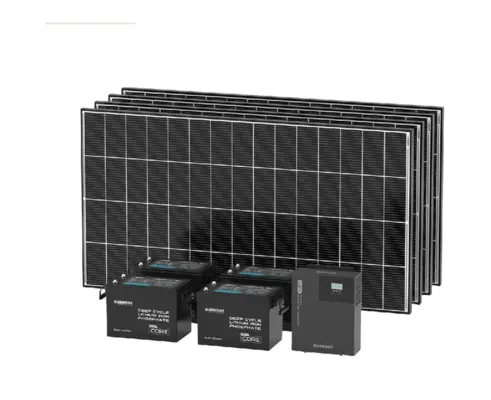
The charge controller is the least glamorous component in every build on this site and the one doing the most continuous thinking — standing between panel and battery, converting the sun's moody output into the exact charge profile the battery wants, and protecting both from each other. Choosing one is a five-minute decision once you know the four specs that matter and the one honest technology question. This guide is those five minutes, written down.
What the controller actually does
A panel's output wanders with light and temperature — voltages well above the battery's, currents that swing by the minute — and a battery fed that chaos directly overcharges, gasses, or dies young, which is why the direct connection is this site's forbidden move. The controller domesticates it: tracking the panel, delivering the battery's chemistry-correct charge stages, tapering as full approaches, and disconnecting faults. Along the way it hosts the features small builds lean on: the load terminals that switch small DC loads with low-voltage disconnect (the fountain and lighting builds' friend), the display or Bluetooth that makes the system legible, and the temperature compensation that keeps charging honest across seasons. It is, in the four-part grammar of the projects pillar, the grammar's verb — and buying it well is mostly matching four numbers.
The four specs that decide everything
System voltage: the controller must speak your battery's voltage — 12V for nearly every build in this series, with auto-detecting 12/24V units common and 48V the workshop-scale graduation. Current rating: the controller's amp rating must exceed your array's maximum output current with headroom — the spec that names the model, sized with a step of growth in mind because arrays in this hobby only ever multiply. Max input voltage: the panel-side ceiling your array's open-circuit voltage must stay under — with the winter caveat that cold raises panel voltage, so the check uses the cold-corrected number, the classic gotcha on series strings. Battery chemistry support: an explicit LiFePO4 profile (or full custom parameters), non-negotiable on this site — legacy controllers speaking only lead-acid dialects mischarge lithium politely and persistently. Every controller box prints all four; the buying act is reading them against your build's numbers, and the wiring guide's connection order governs the install regardless of what you choose.
PWM vs MPPT: the honest question
The technology fork gets a full treatment in our PWM vs MPPT comparison; the executive version lives here. PWM controllers are simple switches — cheap, rugged, and efficient enough when the panel's voltage closely matches the battery's, which describes the classic small build: one 12V-nominal panel, one 12V battery, modest stakes. MPPT controllers actively convert — harvesting the panel's true power point and delivering meaningfully more of it, with the advantage growing as arrays get bigger, panels run at higher voltages, strings go series, or weather turns marginal. The decision rule this series uses: PWM is honest economy for single-panel trickle-and-light duty; MPPT earns its premium the moment the array exceeds one panel, the run gets long, or the build sits on the parts-bin cascade path toward bigger systems — which, per the pillar's prophecy, most builds do. When in doubt between a good PWM and a small MPPT at similar money, the MPPT joins the bin's future; the PWM joins its past.
Features worth paying for (and skipping)
Worth it: load terminals with low-voltage disconnect, which run small DC loads directly and protect the battery from over-discharge — the feature that simplifies half this series' builds; Bluetooth or a real display, because a legible system gets maintained and a mystery box gets neglected (the monitoring sermon from the battery guide, at controller scale); temperature compensation with a battery-mounted sensor where the controller and battery live in different climates; and honest brand provenance — the established names' budget lines over the anonymous listings whose ratings are aspirations. Skippable at this scale: the flagship networking stacks, multi-bank charging, and capacity far beyond the growth step you'll actually take — the workshop guide's systems will name their own controllers when that day comes. And one perennial warning transplanted from the panel world: controllers advertised at implausible amp ratings for implausible prices are advertising, not engineering; the four printed specs only help when they're true, which is what the brand filter is for.
Controllers by build, concretely
Mapping the doctrine onto this series: the fountain, camera, and gate builds live happily on small 10A-class units — PWM where the panel is one and the budget is tight, small MPPT where the bin's future argues. The shed lighting and security backbone starts at 10–20A with the load terminals earning their keep, and graduates with the building. The irrigation and chuck box builds match their pump-and-fridge currents with the usual headroom, the chuck box favoring compact MPPT for campsite harvest efficiency. The e-bike station and workshop systems open the 30A-class MPPT tier where arrays multiply — and the pergola's series strings make the cold-corrected voltage check mandatory rather than academic. One bin habit ties it together: standardize on one or two controller models across builds, and every system shares spares, settings knowledge, and the troubleshooting instincts you've already earned.
Install, verify, forget
The controller's install is the wiring guide's liturgy verbatim: mounted ventilated and close to the battery (the battery side wants the short fat wires; the panel side tolerates the run), battery connected first, chemistry profile set, panels landed last, everything fused on both sides. Commissioning adds the controller-specific checks: charge stage indicators cycling as expected across a sunny day, absorption and float voltages matching the battery maker's numbers, the load terminals' disconnect thresholds set for the battery's health rather than the default's optimism. Then the component earns its reputation by disappearing — a glance at the display on the seasonal walk, a firmware update if the Bluetooth class offers one, and otherwise years of silent translation between the sky and the battery. Which is the entire job description: the small builds' most boring component, keeping every exciting one alive.
Frequently Asked Questions
Do I really need a charge controller for a small panel?
If a battery is involved, yes — direct panel-to-battery connection overcharges and shortens battery life, and it's the forbidden move every build here repeats. The only exception is panel-direct loads with no battery at all, like the dehydrator's fan.
How do I size a charge controller?
Match system voltage, exceed the array's maximum current with headroom, keep the array's cold-corrected open-circuit voltage under the input ceiling, and require a LiFePO4 profile. Those four printed specs are the whole sizing exercise.
Is MPPT worth it on a small build?
For a single-panel 12V trickle build, PWM's economy is honest; for anything beyond one panel, long runs, series strings, or a build headed up the cascade path, MPPT's extra harvest earns the premium. The full comparison covers the crossover math.
What are the load terminals for?
Direct DC output with low-voltage disconnect — the controller runs small loads like lights and pumps while protecting the battery from over-discharge. It's the feature that lets half this series' builds skip a separate protection layer.
Why does cold weather matter for controller sizing?
Panel voltage rises as temperature falls, so an array sized to the input ceiling in summer can exceed it on a cold clear morning — the classic series-string mistake. Size against the cold-corrected open-circuit voltage and winter becomes a non-event.