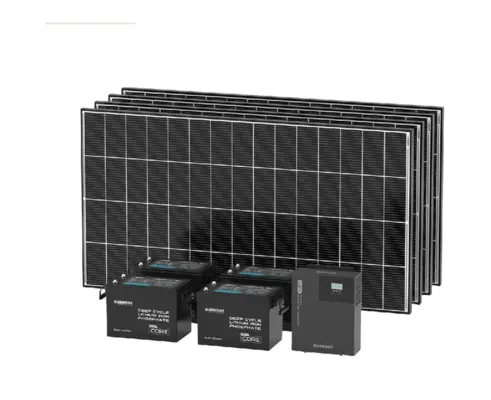
Somewhere past the chuck box and before the cabin sits the most useful vehicle in project solar: the utility trailer with a power system bolted in. Panels on a rack or the lid, a real battery bank in a job box, inverter, lights, and outlets — towed to the worksite, the market stall, the campsite, the outage, the neighbor's disaster — a workshop's electrical system that goes where the work is. This is the series' rolling flagship, the build where every previous skill reports for duty at once. Here's the architecture and the full list.
Design: a workshop system that survives the road
The trailer build is the workshop guide's architecture with vibration as a co-designer. Everything mounts as if the road is trying to disassemble it — because it is: components on a plywood backbone wall or in a lockable job box, the battery restrained like cargo (which it is), every connection crimped and strain-relieved per the wiring guide's mobile doctrine, and the fuse block's spare positions doubled because trailer systems grow faster than any build in the series. The panel decision forks honestly: a fixed rack over the bed (always harvesting, always shading the cargo — the flatbed's friend) versus stowed panels deployed at the destination (the folding-panel craft from the chuck box, at double scale) versus the lid-mount on enclosed trailers — with the flexible-vs-rigid comparison's verdict holding: rigid everywhere the structure allows. Weight and balance join the design: battery bank over the axle, tongue weight respected, and the trailer's plated capacity honored after the system's mass is counted.
Component list
Battery bank: 200Ah-class LiFePO4
$$$The rolling reserve: a 200Ah-class bank (two 100Ah drop-ins or one big unit from the battery guide) runs a worksite's saws-and-chargers day or a market stall's weekend with margin — restrained in a lockable, ventilated box over the axle, fused at the terminal, and heated or shed-wintered per the chemistry's freeze rule.
Inverter: 2000W pure sine class
$$The AC side: a 2000W-class pure sine unit runs real tools — the circular saw's surge, the compressor's start — per the workshop guide's sizing sermon, mounted at the battery on the short fat cables, master-switched, and fed through the DC-vs-AC architecture logic: 12V branches for lights and USB, the inverter waking only for tool duty.
Array: 400W-class rigid + rack
$$The harvest: 400W of rigid panels on a welded or bolted rack (or the enclosed trailer's lid), angled flat-with-tilt-option, wired through an MPPT sized per the controller guide with the cold-voltage check — plus the deployable folding panel for the parked-in-shade days. The rack is a structure build in its own right; the weatherproofing guide's wind rules apply at highway speed.
Power wall: outlets, lights & reels
$The worksite face: a weatherproof panel of AC outlets and USB/12V sockets, LED area lights on a mast or the rack's edge (the shed lighting build's placement craft, outdoors), and a cord reel or two — because the trailer's product is power where hands are, and the last thirty feet is cord management. The face-panel habit, at its largest.
Charge integration: alternator + shore
$The three-source readiness: a DC-DC charger from the tow vehicle's alternator (charging while towing — the road trip that arrives full), a shore-power inlet and converter for driveway top-offs, and the solar as the standing source — integrated per the components' manuals so every path plays nicely. Trailers that charge three ways are never the trailer that shows up empty.
Security & road hardware
$The everything-else: hitch and toolbox locks (a power trailer is a theft magnet with a tongue jack), running/brake light health as the legal baseline, a fire extinguisher mounted where the inverter lives, wheel chocks and a tongue stand for stable deployment, and the documentation card — system map, fuse values, measured loads — laminated inside the box lid per the pillar's habit.
Enclosed vs open: the platform decision
The trailer itself deserves a paragraph before the first bolt. Open utility trailers win on cost, cargo flexibility, and rack simplicity — the power system lives in a lockable job box, the panels ride the overhead rack, and the bed still hauls mulch on Saturday. Enclosed trailers win on security, weather, and the lid's ready-made panel real estate — and they graduate naturally into the mobile-workshop tier where the power wall, bench, and tool storage share the box, which is where market vendors and trades converge. The middle path is the purpose conversion: the used enclosed trailer refitted around the system, which buys the enclosed advantages at open-trailer money and is this build's best-value route for anyone patient with marketplace listings. Whichever platform, the plated-capacity arithmetic comes first — battery, inverter, rack, and toolbox weights summed against the axle's rating with cargo margin left over — because the most common trailer-build regret isn't electrical at all; it's buying the platform one size small.
One licensing sanity check closes the platform chapter: trailer registration, brake requirements by weight class, and insurance conversations all vary by state, and a power trailer's added mass can cross thresholds the bare trailer didn't — the ten-minute DMV website visit before the build beats the roadside version after it. Boring, cheap, and the kind of diligence the rest of this build's torque-and-fuse culture already practices.
The build, in order
Structure first: the rack or lid mount engineered for highway wind (through-bolts, thread-locker, the torque respect of the pergola build at 70 mph), the job box and backbone wall mounted, weight distributed over the axle. Then the system in the standard liturgy: battery restrained and fused, controller configured battery-first, array landed last, inverter on its master switch with cables sized to its worst appetite, and the 12V branches — lights, sockets, the fuse block's prophecy slots — distributed per the shed build's craft. Charge paths join per their manuals: DC-DC from the tow plug, shore inlet where the driveway lives. Commission twice: the driveway weekend (every load, every source, the shunt monitor logging truth) and the shakedown tow — an hour of road followed by the re-torque and re-tug of every fastener and terminal, because the first drive is the build's real inspector.
The missions: one trailer, many jobs
The finished trailer becomes the property's Swiss Army vehicle. Worksite: tools, chargers, and lights at the fence line or the build site, no generator drone — the workshop guide's system where the workshop can't be. Events and markets: the stall's lights, card reader, fridge, and fans on silent power, which market neighbors notice enviously and immediately. Camp: the chuck box's big sibling, running the group site. Outage: backed up to the house as a rolling annex of the home backup plan — the fridge extension cord's best-case scenario. Neighbor's disaster: the build's finest hour, and the reason the documentation card matters — a system a stranger can safely use is the difference between help and a hazard. Between missions it lives charged (three sources make that automatic), locked, and ready — the series' entire philosophy with a license plate.
Bottom line
Workshop architecture, road-proofed: a restrained 200Ah bank, a 2000W pure sine inverter, 400W on a rack built for highway wind, three charge paths, and a power wall where the work happens. Torque it, shake it down, re-torque it, and the most useful vehicle you own is suddenly the one with no engine — power where the work is, forever, on sunshine and a hitch.
Frequently Asked Questions
How big a battery bank does a power trailer need?
The 200Ah LiFePO4 class covers a worksite day of tools-and-chargers or an event weekend with margin — sized per the runtime calculator's method against your real loads, restrained over the axle, and grown by drop-in as missions prove bigger.
Can the panels stay mounted while towing?
On a properly engineered rack, yes — through-bolted, thread-locked, and torqued for highway wind, then re-checked after the shakedown tow. Rigid panels on real racking are built for it; the flexible-panel shortcut is the comparison guide's classic mistake.
How does the trailer charge besides solar?
Three ways by design: a DC-DC charger from the tow vehicle's alternator (arrives charged), a shore-power inlet for driveway top-offs, and the array as the standing source. Multi-path charging is what makes the trailer never show up empty.
Can it power a house during an outage?
As a rolling extension-cord annex for essentials — fridge, lights, chargers — yes, exactly like a large power station on wheels. Whole-house transfer-switch integration is the home backup guide's territory and an electrician's conversation.
What maintenance does a trailer system need?
The mobile additions to the standard walk: re-torque and terminal-tug after hard tows, the road-light and tire health the law requires, quarterly battery telemetry, and the seasonal weatherproofing inspection. Vibration is the only new adversary; the crimp-and-restrain doctrine already answered it.