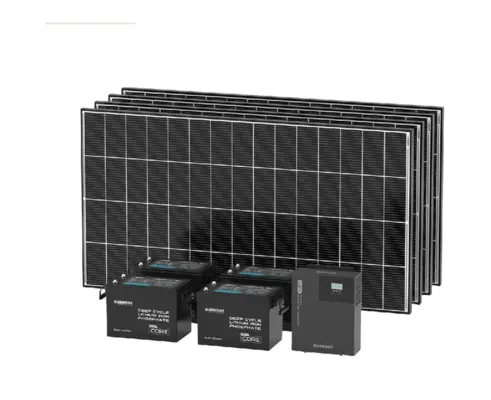
Everyone knows solar landscape lighting — the stake lights that glow bravely for a season, dim by fall, and die in the junk drawer. This build is the other kind: a centralized 12V system, one panel and one battery feeding real fixtures on real wire, delivering the warm, designed, all-night lighting that makes landscapers money — at DIY cost and zero trenched AC. It's the shed lighting build gone outdoors and gone aesthetic, and it permanently retires the stake-light cycle. Here's the system and the design craft.
Why centralized beats stakes
The stake light's flaw is architectural: each unit carries its own tiny panel, tiny battery, and tiny LED — three compromises per fixture, multiplied by every shaded placement (the spot under the tree that most wants light gets the least charge) and aged by every cheap cell's winter. The centralized system inverts all of it: one properly sized panel in the yard's actual sun, one LiFePO4 battery that shrugs at cloudy weeks, and low-voltage wire runs to fixtures chosen for their light rather than their electronics. The result is landscape lighting's professional architecture — which is, conveniently, already a 12V trade running on transformers and low-voltage cable — meaning the entire mature fixture catalog, connectors, and design tradition plug directly into this series' standard solar backbone. You're not improvising; you're substituting a panel-and-battery for the transformer and keeping everything else the industry perfected.
Component list
12V LED landscape fixtures
$–$$The payload: the low-voltage landscape catalog — path lights, spots, well lights, hardscape strips — in warm color temperatures (the warm end reads as designed; cool white reads as security). Brass and composite tiers outlive the bargain aluminum; buy fixtures for beam and build, since the electronics burden now lives at the hub.
100W panel + mount
$The collector, sited where the yard's sun actually lives — the entire advantage over stakes — on a simple rack, fence, or shed face per the mounting practices this series repeats. 100W over-serves most lighting loads deliberately: winter nights are longest exactly when days are shortest, and the surplus is the season's margin.
LiFePO4 battery (50Ah class)
$$The reservoir: a 50Ah LiFePO4 carries a full yard of LED fixtures through long winter nights with cloudy-day margin — the battery guide's small class doing its most decorative work. Housed in the weatherproofed hub enclosure, fused, and wintered per the chemistry's rules.
Charge controller with load terminals + timer/photocell
$The brain: a controller whose load terminals run the lighting branch with low-voltage disconnect — the feature the controller guide flags for exactly this build — switched by dusk-to-dawn photocell, timer, or the smart relay for phone control and scenes. Dusk-on with a late-night step-down is the classic schedule that stretches the battery and calms the neighbors.
Low-voltage cable & waterproof connectors
$The distribution: direct-burial low-voltage landscape cable in the gauges the wiring guide's drop math demands (lighting runs get long — the far path light is where undersized wire dims first), with gel-filled waterproof connectors at every fixture tap. Shallow-buried or mulch-hidden per the low-voltage trade's easy rules; no trencher, no electrician.
Hub enclosure & fusing
$The heart's housing: the weatherproofing guide's standard — vented IP enclosure, glands down, fused battery lead and fused zone branches on the small block — mounted behind the shrubs or on the shed's back face where the panel run is short and the aesthetics don't care. The shed build's plywood-board habit, outdoors.
The build, in order
Design at dusk first: walk the yard at night with a flashlight and a helper, painting the beams you want — up into the specimen tree, low across the path, grazing the stone wall — because lighting design is done in darkness and hardware merely executes it. Then the hub: enclosure mounted, battery and controller in with the standard liturgy (battery first, LiFePO4 profile, panel last, everything fused per the wiring guide), photocell or timer on the load branch. Runs next: cable laid along beds and under mulch to each fixture group, connectors gel-sealed, the far-run voltage checked against the drop math before burial. Fixtures last, placed per the dusk walk and aimed at night — the step stake lights never get — with the final evening spent adjusting beams the way the design deserves. Total: a weekend, half of it the pleasant kind.
The design craft: light like you mean it
The trade's principles translate directly. Light objects, not air: beams belong on trees, walls, and destinations; the glow between them is what paths and eyes infer. Layer heights: low path pools, mid-level shrub and wall grazing, and one or two up-lit canopies give the yard depth a row of identical stakes never finds. Hide sources: the fixture seen is the design broken — shielded heads, plantings, and aim angles keep the light and lose the glare. Restraint wins: the classic amateurism is too many fixtures too bright; the professional look is fewer, warmer, dimmer, and deliberate — which also happens to be the battery's favorite spec. Dark-sky manners: aim down and shield up where the sky and the neighbors deserve it, per the same courtesy the floodlight guide preaches. A yard lit this way reads as money after dark, and the meter it isn't running is the punchline.
Winter, weather, and the system's year
The system's calendar is kinder than the stake lights ever managed. Winter is the design season and the stress test at once: nights are longest, the sun is lowest, and the hub's honest sizing — the oversized panel, the 50Ah reserve, the late-night step-down schedule — is what carries the yard through December looking intentional while the neighbors' stakes flicker out. The battery follows the chemistry's rules (the hub enclosure sited with winter charging in mind, or the heated-pack option in hard-freeze country), the fixtures shrug at weather by construction, and the wire under the mulch simply doesn't care. Spring brings the annual walk: fixtures re-aimed after frost heave, lenses wiped, connections glanced, and the beds' new growth negotiated with the beam angles — plantings grow into lights the way trees grow into views, and the five-minute spring adjustment is the difference between year-three yards that still read designed and ones that read abandoned. Summer and fall are the payoff seasons: long evenings, low duty, and a battery that barely notices the work.
Zones, scenes, and the growth path
The fuse block's spare positions carry the prophecy as always: the front path zone this fall, the patio zone by spring, the garden's feature tree by summer — each a fused branch and a length of cable on the existing hub. The smart-relay tier adds scenes (entertaining bright, everyday calm, away-mode minimal) and folds the yard into the household's automation alongside the weather station's triggers. Holiday season borrows the backbone outright — the holiday rig build is this system wearing a costume — and the security layer merges naturally where the shed system's motion floods share the yard. One hub, one panel, one battery, and the property's entire after-dark personality runs on the same quiet architecture as everything else in this series.
Bottom line
One panel in real sun, one LiFePO4 at the hub, low-voltage runs to fixtures chosen for their light — designed at dusk, aimed at night, and switched by the sky. The stake-light cycle ends, the yard reads as designed, and the only thing the system shares with the junk-drawer tier is the word solar.
Frequently Asked Questions
Why is this better than regular solar stake lights?
Stake lights compromise panel, battery, and LED per fixture and die by the season; the centralized system puts one real panel in real sun, one LiFePO4 at the hub, and quality fixtures on wire. It's the professional low-voltage architecture with solar replacing the transformer.
How many lights can the system run all night?
A 50Ah LiFePO4 carries a full yard of warm LED fixtures through long winter nights with margin — landscape LEDs sip, and the design craft's restraint principle conveniently matches the battery's preference. The runtime calculator's method sizes your exact count.
Do I need to trench for the wiring?
No — low-voltage landscape cable is direct-burial rated and traditionally runs shallow under mulch and along beds, which is precisely why the trade standardized on 12V. No trencher, no conduit, no electrician.
What controls the lights on and off?
The controller's load terminals through a dusk-to-dawn photocell, a timer, or a smart relay for schedules and scenes — dusk-on with a late-night step-down is the classic battery-stretching schedule.
Can I add zones later?
That's the architecture's point: each zone is a fused branch and a cable run on the existing hub, and the fuse block's spare slots are the growth plan. Most yards build out over a year, one pleasant weekend at a time.