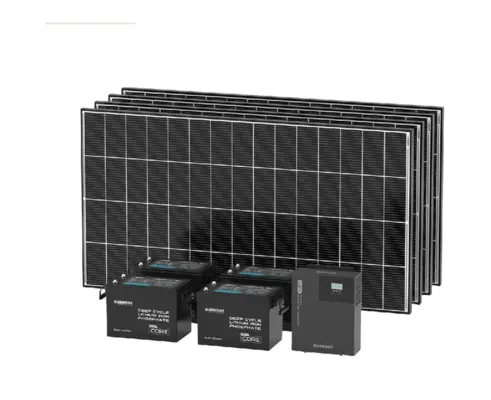
Holiday lighting has a quiet arms race and a louder electricity bill — and a December power outage takes the whole show down at its one job. This build ends both: a solar rig that runs the season's entire display from a battery charged by the low winter sun, timed by the sky, immune to the grid, and reusable every season for every holiday the household celebrates. It's the landscape lighting build in a costume, the series' most joyful deployment of LED math, and the December answer to the neighbor's generator hum. Here's the rig.
The math that makes it work: LEDs changed everything
The build exists because holiday lighting quietly became a solar-friendly load: LED string sets sip at a small fraction of the incandescent wattage that defined the old bills, which means a display that once demanded a dedicated circuit now sums to a battery-friendly nightly budget — the runtime calculator's arithmetic, wearing tinsel. The seasonal twist is the sizing challenge: December pairs the year's longest display hours with its shortest charging days, so the rig sizes to winter honestly — panel wattage bought for the low-sun harvest per the site survey's winter reading, battery capacity carrying multiple nights against gray stretches, and the display budget itself designed to the system rather than discovered by it. The discipline pays twice: the same restraint that fits the battery reads as designed rather than inflatable-lot, and the rig that runs Christmas runs Halloween, Diwali, Eid, and the graduation party on the same architecture with the calendar as the only change.
Component list
12V LED holiday light sets (the native route)
$The efficient core: 12V LED string, icicle, and net sets from the RV/off-grid catalog run battery-direct — no inverter, no conversion tax, the architecture guide's DC-first rule in festive form. Warm white reads classic; the color-changing 12V tiers cover the multi-holiday mission on one hardware set.
Inverter branch (for the AC display box)
$The pragmatic path: the household's existing AC light collection runs from a small pure sine inverter — sized to the summed display, master-switched, and fed per the wiring guide's cable rules — accepting the conversion tax as the price of the garage's accumulated bins. Most rigs run hybrid: 12V for the new and permanent, the inverter for the heirloom strands.
Battery: 50–100Ah LiFePO4
$$The reservoir, winter-sized: display hours times nightly draw times the gray-stretch margin lands most home displays in the 50–100Ah class — the battery guide's picks, wintered per the freeze rule in the garage-side hub. The bigger class buys the bigger show and the outage-week serenity.
Panel: 100–200W at winter tilt
$$The December harvest: 100–200W mounted steep for the low sun — the air heater build's winter-angle lesson, decorating — in the yard or roof spot the site survey's winter reading endorsed. The season's short days are the whole sizing case; summer's version of this panel is comically oversized, which is exactly right.
Controller, timer & the show branch
$The conductor: the standard MPPT with load terminals, a dusk-dawn photocell or timer running the season's schedule (dusk-on, late-evening off is the battery's favorite show), and — the enthusiast tier — the 12V-friendly show controllers that sequence zones and sync music, which the hobby's deep community documents generously. The landscape build's control craft, in December costume.
Weatherproof distribution & mounting kit
$The deployment fleet: outdoor-rated connectors and gel splices, fused distribution to the display zones, gutter hooks and clips that survive wind per the weatherproofing guide, cable protection at walkways, and the storage system — labeled bins by zone — that makes next November a one-afternoon deployment instead of an archaeology dig.
The build, in order
Budget the show first: sum the display's real wattage (the watt meter on the AC bins; the label math on the 12V sets), size battery and panel to December's honest arithmetic, and let the total argue the design edits early. Hub next, in the standard liturgy: enclosure in the garage or shed corner, battery-first, winter-tilted panel landed last, branches fused per the wiring guide — the 12V zones on the load terminals' schedule, the inverter branch master-switched for the AC strands. Then the pleasant weekend: zones deployed per the labeled-bin map, connectors sealed, walkway runs protected, timer set to the season's schedule. Commission with the full-show test on a charged battery and the shunt or controller reading across the first nights — the December version of every build's telemetry week, confirming the math before the gray stretch audits it.
Halloween, and the multi-holiday calendar
The rig's second season is where the architecture shows off. Halloween's display profile is the battery's favorite — shorter run hours, earlier off-times, and October's sun still generous — which is why many builders commission the rig in October as the low-stakes shakedown before December's real exam. The load list diversifies charmingly: 12V LED spots in orange and purple from the landscape catalog, the fog machine question answered by the architecture guide (a brief AC burst on the inverter branch, sequenced rather than continuous), and the motion-triggered props sharing the shed security build's sensor craft for the porch's jump-scare economy. The rest of the calendar rides the same hub: Diwali's diyas-and-strings profile, Eid's crescents, the Fourth's porch bunting lights, birthdays and graduations at pop-up scale — each one a labeled bin and a timer preset, and none of them a new system. The multi-holiday math also settles the 12V-versus-heirloom question over time: each season's replacement purchases migrate toward the 12V catalog, the inverter branch's bins shrink by attrition, and the rig quietly completes its DC-first conversion the way the architecture guide predicted — one retired incandescent strand at a time.
Running the season (and the years)
The rig's operating rhythm is pleasantly light: the photocell runs the schedule, the panel refills the days, and the mid-season glance at battery state is the whole management burden — with the gray-week playbook (trim the show's late hours, or let the household power station guest-star as reinforcement) held in reserve. The outage scenario is the rig's quiet flex: the December storm that darkens the street leaves the display running, which is both the neighborhood's best morale moment and the visible proof-of-concept for the backup guide's whole philosophy. Off-season, the rig converts rather than retires: the hub and battery serve the landscape system year-round, the panel keeps its winter job or re-tilts for summer duty, and the labeled bins wait. Season over season the display grows on the fuse block's spare slots, the show controller tier tempts the ambitious, and the bill that used to spike in January simply doesn't — the series' cheerfulness, itemized.
One neighborly footnote earns its sentence: displays that run on their own battery also run on their own schedule, and the photocell's late-evening off-time is a courtesy the block notices as much as the show itself — the dark-sky manners of the landscape build, in season. The rig makes seasonal generosity cheap and automatic; the timer is what keeps it polite past bedtime.
Bottom line
LED math made the show battery-sized; winter-tilted panels and an honest December budget make it solar; the photocell makes it automatic; and the labeled bins make it annual. Run the new strands on 12V, the heirlooms on the switched inverter, and let the one house still lit through the storm be the argument this whole series was making all along — cheerfully, automatically, and entirely off the December bill it used to spike.
Frequently Asked Questions
Can solar really run a whole holiday display?
With LED sets and honest December sizing, yes — modern LED strings sip a small fraction of incandescent draw, landing typical displays in battery-friendly nightly budgets. The design discipline is sizing to winter's short days and long nights.
Should I buy 12V holiday lights or use my existing ones?
Both is the practical answer: 12V LED sets run battery-direct with no conversion tax for the permanent core, while a small switched pure sine inverter runs the garage's heirloom AC bins. Most rigs are hybrids.
How big a battery does a display need?
Nightly display draw times hours times a gray-stretch margin — most home shows land in the 50–100Ah LiFePO4 class. The bigger end buys outage-week serenity and the growth the fuse block's spare slots predict.
What happens during a power outage?
Nothing — that's the rig's quiet flex: the display runs on its own battery and panel, grid or no grid. The December storm that darkens the street leaves the show lit, which is the whole series' argument in fairy lights.
Is the rig only for Christmas?
The architecture is holiday-agnostic: the same hub, battery, and zones run Halloween, Diwali, Eid, birthdays, and the landscape system's year-round duty between them. The calendar changes; the system doesn't.