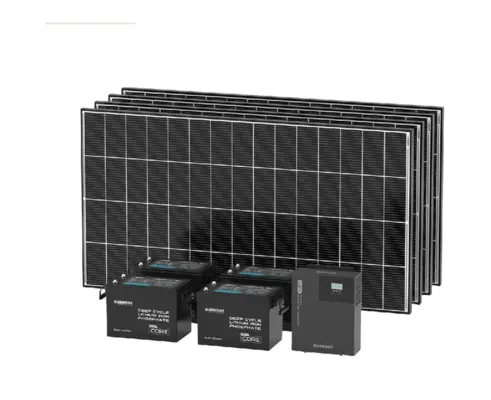
An automatic gate is one of those upgrades that sounds like estate money until you price the solar version: a swing or slide operator, a panel, and a battery — no trench to the house, no electrician, no meter. Solar is genuinely the native power source for gates, because the load profile is perfect for it: seconds of motor work a handful of times daily, with a battery holding the rest. Here's the honest build, from operator choice to the cold-weather details that separate reliable gates from decorative ones.
Why gates and solar were made for each other
A gate motor works hard briefly and rests long — a duty cycle that sums to a small daily watt-hour budget even on busy driveways. That's why every serious gate operator ships battery-ready and why solar packages dominate rural installs: the panel's job isn't running the motor (the battery does that) but replacing the day's few openings plus the controller's standby trickle. The standby draw is the quiet variable — receivers, sensors, and smart modules sip around the clock, and it's the number that actually sizes the panel. The system layout mirrors every build in this series: panel → charge controller (often built into the operator's control board) → battery → load, with the operator's electronics as a permanently-on branch and the motor as the surge branch.
Component list
Swing gate operator kit (solar-ready)
$$–$$$The mainstream path: single- or dual-swing operator kits from the established names — Ghost Controls and Mighty Mule anchor the DIY tier — with solar-ready control boards, remotes, and safety-reverse sensing. Match the kit's rating to your gate's length and weight class honestly; an operator at its limit lives a short, angry life.
Slide gate operator (where the driveway suits)
$$$Sliding gates trade the swing's simplicity for wind resistance and tight-space fit — and their operators draw similarly gate-friendly budgets. The DIY tier covers standard residential slides; verify the track and trolley hardware ships with the kit or budget it separately.
Panel (10–30W dedicated class)
$Gate math wants less panel than people guess: dedicated 10W panels maintain light-use gates, 20–30W covers busy driveways, smart-module standby, and northern winters. Many kits include a starter panel — upgrading it is the single best reliability move for heavy-use or low-sun installs.
Battery (12V LiFePO4 or kit AGM)
$–$$Kits traditionally ship AGM; a LiFePO4 swap from our battery guide's mini class buys cycle life and cold-weather grace — confirm the operator's charging profile supports lithium (current boards increasingly do) or add a small external controller. Size for a week of openings plus standby; the battery is the gate's real engine.
Access accessories
$The livability layer: extra remotes, a keypad for guests and deliveries, a vehicle exit sensor or free-exit loop, and — increasingly standard — the smart module that puts the gate on your phone. Each adds a sliver of standby draw; sum them into the panel math rather than discovering them in February.
Safety and install hardware
$The non-negotiables: photo-eye or edge sensing for obstruction reversal (kits include the basics — install them, always), proper post mounting rated for the operator's forces, conduit or armored runs for any buried leads between posts, and the warning signage that codes and common sense both expect.
Gate mechanics: the half that decides everything
Operators get the attention, but gates make or break the project before any electron moves. A gate that binds, sags, or fights the wind forces the motor to work against friction every cycle — draining the battery math, tripping force limits, and wearing the operator toward early failure. The pre-build checklist: hinges that swing the gate freely with one finger, posts plumb and set deep enough that the operator's forces don't rock them, sag corrected with a diagonal brace or wheel before automation rather than after, and — for slide gates — track that's level, clean, and long enough for the full travel plus the operator's engagement. Wind deserves its own line: solid-infill gates are sails, and windy sites either choose open-design gates, spec operators rated for the load, or accept that the gate holds open on the worst days. An afternoon of mechanical honesty here is worth more than any component upgrade below — the best solar gate is a good manual gate that happens to have a motor.
The build, in order
Gate first, power second: the operator's mechanical install — post brackets, arm geometry or track alignment, and a gate that swings freely by hand before any motor touches it — is most of the labor and all of the reliability. Then the electrical, in this series' standard order: battery to control board first, configure, panel last, everything fused per our wiring guide. Mount the panel where the sun actually lives (the fence line's sunny post, not necessarily the gate post — a longer wire beats a shaded panel), aim it at your winter sun angle since winter is when margins matter, and set the operator's close timers and force limits conservatively before trusting it around cars and kids. Test the safety reverse with a cardboard box until it bores you.
Cold weather and heavy use: the reliability details
Gates fail in February, and almost always for battery reasons: cold cuts usable capacity exactly when short days cut recharge. The defenses stack: the panel-size upgrade, LiFePO4's gentler cold behavior (with the charging caveat from our battery guide — heated or well-sited packs for hard-freeze country), a battery box that shelters from wind, and trimming standby loads you don't use. Heavy-use driveways add duty-cycle honesty: operators publish openings-per-day ratings, and a farm gate cycling constantly wants the commercial tier, not the residential kit run angry. The maintenance rhythm is annual and short — hinge lubrication, force-limit retest, connection check, panel wipe — and a gate built to this list simply works, which is the entire point of the upgrade.
Living with an automatic gate
The first month reveals the settings the manual couldn't: the close-timer that suits your actual driveway rhythm, the remote range from where you really press it, the keypad codes for the recurring cast — deliveries, the neighbor who feeds the dog, the in-laws. Build the habit of the monthly force-limit test (the cardboard box again), teach every driver the manual-release procedure before the day it's needed, and keep one remote in the house as the master spare. Guests and delivery drivers become the system's real users faster than you expect, which is the argument for the keypad and the smart module earning their standby draw. And on the annual maintenance day, walk the whole chain — hinges, battery terminals, panel wipe, safety reverse — in the fifteen minutes it takes, because gates reward small attentions with years of silence — and punish neglect at the least convenient hour, usually in weather.
Bottom line
Match the operator to the gate's honest weight and duty, upgrade the panel past the kit's minimum, feed it LiFePO4, fuse everything, and give the mechanical install the patience it deserves. The result is the driveway that opens itself, powered by the sun, for less than the trench alone would have cost — rural estate tech at parts-bin prices. And like every build in this series, the components cascade: the day the driveway gets a bigger system, this battery and panel redeploy to the next project on the list, having already paid for themselves in never once walking to the gate in the rain again.
Frequently Asked Questions
How big a solar panel does a gate opener need?
Smaller than intuition says: 10W maintains light-use gates, 20–30W covers busy driveways, smart modules, and winter. The panel replaces a few openings plus standby draw daily — the battery does the actual motor work.
Will a solar gate opener work in winter?
Sized for it, yes — winter failures are battery failures: cold-cut capacity meeting short-day recharge. The fixes are a panel upgrade, LiFePO4 (heated or sheltered in hard-freeze climates), and trimming standby loads.
Can I convert my existing wired gate opener to solar?
Often — many operators accept battery-plus-panel power natively, or a small standalone solar-charged 12V system can feed a compatible board. Verify the operator's input requirements and charging compatibility before buying panels.
How heavy a gate can DIY solar operators handle?
The residential DIY tier covers standard driveway gates by length and weight class, published per model — respect the ratings, because an operator at its limit fails early. Oversized, dual, or constant-duty gates belong to the commercial tier.
Are solar gate openers safe around kids and cars?
With the included obstruction sensing installed and force limits set conservatively, yes — that's what the safety-reverse hardware exists for. Install the photo eyes, test the reversal regularly, and post the signage; skipping those is the only unsafe version of this build.