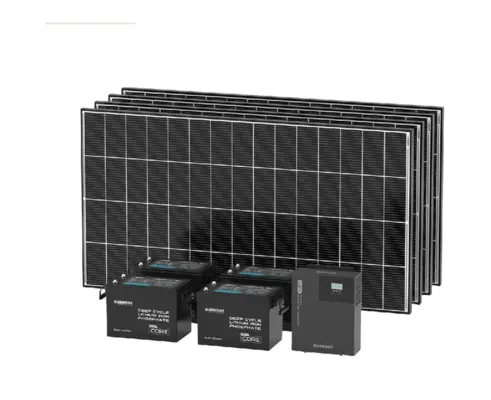
The e-bike turned the daily commute electric; this build makes it solar. A dedicated charging station — panel array, battery buffer, and an inverter feeding the bike's own charger — turns every parked hour into range, cuts the garage-outlet ritual, and gives the household's newest vehicle its own fuel supply. It's also this series' cleanest lesson in matching solar to a real transportation load. Here's the build, the math, and the honest architecture decision at its heart.
The architecture decision: buffer battery or direct dock
E-bike chargers are AC appliances — they want an inverter — and the build forks on when that inverter runs. The buffered station (the recommended build) charges a stationary LiFePO4 bank all day from the panels, then delivers to the bike through the inverter whenever the bike shows up: overnight, rainy evenings, whenever. The bike's schedule and the sun's schedule decouple, which is the whole convenience. The direct dock skips the buffer — a power station or inverter runs the bike charger straight from panel harvest — cheaper and simpler, but the bike must be present during sun hours to benefit, which suits home-all-day patterns and defeats commuters. The buffered math also rescues panel sizing: the array charges the buffer across the whole day at leisure, so modest panels serve a daily-commute load that would demand a much larger direct-charging array. This is the sizing guide's watt-hours logic wearing bike shorts.
Component list
Buffer battery: 100Ah-class LiFePO4
$$The station's heart: a 100Ah drop-in holds several full bike charges — a commute-week's buffer — and the battery guide's picks apply verbatim. Garage-mounted, ventilated, fused, and (in freezing climates) heated or indoor per the chemistry's one hard rule.
Pure sine inverter (300–500W class)
$The AC bridge: e-bike chargers draw modestly — a 300–500W pure sine inverter runs any mainstream charger with headroom, and pure sine is non-negotiable for the charger's electronics. Mount at the battery with the short fat cables the wiring guide prescribes; switch it so it sleeps when the dock is empty.
Panel array: 200–400W fixed
$$The daily harvest: two to four 100W rigid panels on the garage or shed roof recover a commuter's daily consumption with weather margin — the workshop guide's mounting practices apply directly. Renters substitute the balcony-and-folding-panel pattern at reduced pace; the architecture is indifferent.
MPPT controller + monitoring
$The manager: an MPPT controller sized to the array, plus a shunt-based battery monitor so the station's state of charge reads at a glance — the fuel gauge that tells you whether tonight's charge comes from sun or grid. The PWM-vs-MPPT comparison settles the controller class; at this array size, MPPT earns it.
The dock itself: mounting & cable management
$The furniture: a wall-mount bike dock or floor stand beside the station, the charger shelf-mounted with its cable reaching the bike's port naturally, a hook for the helmet, and drip-loop discipline on every cord — the five-dollar details that decide whether the household actually uses the station or keeps charging in the kitchen.
Second-vehicle expansion: scooter/tool branch
$The inevitable growth: the same buffer happily adds branches for the scooter, the kids' bikes, the mower's battery, and the garage's tool chargers — each a fused AC outlet or 12V branch on the existing spine. Budget the outlet strip now; the station becomes the garage's charging wall within a season.
The build, in order
Mount the array on the sunny roof face per the workshop guide's practices — gland the cable entry, tilt roughly at latitude, prioritize shade-free over perfectly-aimed. Inside: battery and controller on the wall in the protected corner, connection order as always (battery first, configure for LiFePO4, panels last), fuses at the battery and every branch, inverter at the battery with its switch reachable from the dock. Build the dock: bike stand, charger shelf, cable run, helmet hook. Then commission with the monitor: a week of normal commuting while watching the shunt tells you the station's real balance — harvest in, bike out — and whether the array or buffer wants a size adjustment. Most builds discover pleasant surplus, which is what the expansion branch exists to absorb.
The commuter math
An e-bike's appetite is refreshingly small: a typical commute consumes a fraction of the bike's battery, and even a full pack holds well under a kilowatt-hour — meaning a modest fixed array's daily harvest covers commuting with room to spare, and the 100Ah buffer holds a week of it. Run your own numbers with the sizing guide's method: the bike battery's watt-hours times your charges-per-week, against the array's honest local harvest — and let the buffer absorb the weather. The efficiency footnote: panel-to-buffer-to-inverter-to-charger stacks conversion losses, which the deliberate array oversize covers; the direct-dock architecture trims a stage for the home-all-day crowd. Either way, the station's economics are less the point than its habit-shaping: a bike that fuels itself in the garage gets ridden more, which was the real project all along.
Renters and no-roof versions
The station's architecture survives translation to smaller footprints. The balcony version pairs the folding-panel-plus-power-station pattern from our balcony comparison with the bike's charger on the station's AC outlet — slower harvest, identical convenience, zero installation. The shared-garage version mounts the buffer and dock at your parking spot with the panel wherever the building's sun actually falls, cable run permitting — or accepts grid charging into the buffer during off-peak hours, keeping the dock's convenience while the solar half waits for a sunnier address. And the minimal version is simply discipline plus a power station: charge the station from a window panel by day, the bike from the station by night. Every version preserves the build's real product — the automatic habit — and upgrades toward the full station as housing allows. The components, as always in this series, carry forward intact.
Safety and charging discipline
The station inherits e-bike charging's standing rules and improves on the kitchen outlet it replaces: charge with the bike's own manufacturer charger (the station powers it; it never replaces it), on the dock's non-combustible surface with clearance, ideally while home per battery-safety convention — which the buffered architecture makes easy, since evening charging is its native mode. The inverter's switch means the AC side sleeps when unused; the fused branches mean faults open circuits instead of arguments. Lithium bike packs in freezing garages follow the same chemistry rule as the buffer: charge above freezing, which winter commuters solve with indoor pack storage — the bike's pack pops off precisely for this. None of it is burdensome; all of it is the difference between a charging wall and a worry.
Bottom line
Buffer battery, modest fixed array, pure sine inverter, and a dock that makes the habit automatic — sized by the commuter math and expanded branch by branch as the garage's vehicles multiply. The e-bike was already the cheapest commute in town; this build makes its fuel free and its charging ritual disappear. It also quietly rehearses every skill the bigger transportation-solar future asks for — array sizing, buffered storage, AC delivery — which means the household that builds a bike dock today reads the home-EV-charging conversation tomorrow with a builder's eyes. The garage wall, like everything in this series, is a foundation wearing a finished project's clothes, and the next branch is always exactly one fuse away.
Frequently Asked Questions
How many solar panels does it take to charge an e-bike?
Fewer than intuition says: a modest 200–400W fixed array's daily harvest covers typical commuting via the buffer battery, since a full bike pack holds well under a kilowatt-hour. The buffer decouples the bike's schedule from the sun's, which is what makes small arrays sufficient.
Can I plug my e-bike charger into a solar panel directly?
Not directly — chargers are AC appliances needing an inverter, and panel output alone is too variable. The direct-dock version runs the charger from a power station or inverter during sun hours; the buffered build charges anytime.
Do I have to use the bike manufacturer's charger?
Yes — the station powers the bike's own charger through a pure sine inverter; it never substitutes for it. Battery-safety conventions and warranties both assume the matched charger, and the build respects that.
Will this work for two e-bikes or a scooter too?
Naturally — the buffer's capacity covers multiple light-EV charges, and expansion is a fused branch per vehicle. Most stations grow into the garage's general charging wall within a season; budget the outlet strip early.
Is it worth it financially, or is this a fun project?
Both, honestly: the fuel savings are real but gradual, while the convenience and the ride-more habit arrive immediately. Like most builds in this series, the payback math improves every year the components cascade into further projects.