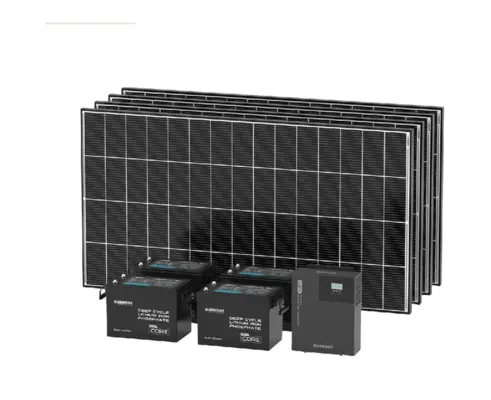
Every project's parts list hits the battery line, and the marketplace still offers both centuries: the lead-acid family — flooded, AGM, gel — at seductive sticker prices, and the LiFePO4 this series specifies at every turn. The comparison deserves its honest airing rather than a dogma, because lead-acid's case isn't zero — it's just narrow, shrinking, and routinely misjudged by sticker math. Here's the full accounting, and the few places the old chemistry still earns a build.
The sticker lie: usable capacity and cycle math
Lead-acid's price advantage evaporates under two corrections. Usable capacity: lead-acid batteries suffer when discharged past half — the standing guidance that a 100Ah lead battery is really a 50Ah battery with a 100Ah label — while LiFePO4 delivers essentially its full rating; the honest per-usable-amp-hour comparison starts by doubling lead's sticker. Cycle life: the lead family's hundreds of cycles against LiFePO4's thousands means the project that cycles daily replaces lead banks repeatedly inside one lithium lifespan — the arithmetic the cycle-life guide runs in full. Stack the corrections and the cost-per-delivered-watt-hour verdict inverts the sticker completely: LiFePO4 is the cheap battery wearing the expensive price tag, which is why this series, the power-station industry, and the off-grid world all converged on it. The supporting cast seals it: a fraction of the weight, no maintenance rituals, faster charging acceptance, steadier voltage under load (the lights don't dim as the night ages), and the BMS's built-in adult supervision.
Head to head
| Lead-acid (flooded/AGM/gel) | LiFePO4 | |
|---|---|---|
| Sticker price | The seduction | Higher up front |
| Usable capacity | ~Half the label | Essentially the label |
| Cycle life | Hundreds | Thousands |
| Cost per delivered Wh | The expensive one, honestly | The cheap one, honestly |
| Weight | The anchor | A fraction |
| Maintenance | Flooded: rituals; AGM/gel: less | None |
| Cold charging | Tolerant (its real card) | Above freezing only |
| Voltage under load | Sags as it drains | Steady to the end |
| Best remaining niches | See below — narrow and real | Everything else in this series |
Where lead-acid still honestly plays
The old chemistry's remaining hands, dealt straight. The freezing-charge niche: lead tolerates sub-freezing charging that LiFePO4's chemistry forbids — relevant for the unheated, unattended winter build where a heated lithium pack or insulated enclosure can't be justified, though the heated-variant tier from the battery guide has narrowed this card substantially. The kit-inertia niche: gate operators, fence energizers, and backup-sump kits still sometimes ship lead-tuned charging boards, and running the included AGM until its natural death before the lithium swap is defensible thrift — the builds' own articles flag the compatibility check. The float-service niche: loads that sit at full charge on float duty for years with rare shallow use (the classic standby profile) suit AGM's temperament tolerably, though LiFePO4's calendar aging under the same duty has proven gentler than early caution assumed. The scrounge niche: free and salvage lead batteries power learning builds and disposable experiments at the unbeatable price of nothing — with the venting, acid, and disposal responsibilities the chemistry brings along. Beyond these, the lead purchase in a new build is nostalgia invoiced as savings.
The switching craft: moving a build to lithium
Conversions are this comparison's practical payload, and the checklist is short. Charging compatibility first: the controller or the equipment's onboard charger must speak a LiFePO4 profile (or adjustable parameters matching the battery maker's sheet) — the controller guide's non-negotiable, and the reason legacy kit conversions sometimes add a small external controller. Physical fit second: lithium's weight savings occasionally cuts the other way — battery boxes and hold-downs sized for lead's mass want re-securing for the lighter pack, per the trailer build's restraint doctrine. Low-temperature protection third: the BMS cutoff verified, or the heated variant specified, for any build wintering outdoors — the one lead advantage the conversion must consciously replace. And the fleet logic last: per the parts-bin standardization habit, converting builds onto the same one or two LiFePO4 models the rest of the property runs multiplies spares, knowledge, and the cascade economics that make the whole series compound. The conversion done, the build inherits the series' default assumption — and the lead core goes to the recycler that, credit where due, closes lead's genuinely excellent recycling loop.
Bottom line
Correct the sticker for usable capacity and cycles, and LiFePO4 wins the cost argument it supposedly loses — plus the weight, maintenance, and voltage arguments nobody disputes. Lead-acid keeps its narrow hands: the freezing charger, the legacy kit, the float sitter, the free scrounge. Everything else in this series buys lithium once instead of lead repeatedly, and the parts bin gets lighter, simpler, and cheaper per delivered watt-hour doing it — the chemistry century has turned, whatever the sticker still claims.
Frequently Asked Questions
Isn't lead-acid much cheaper than LiFePO4?
Only on the sticker: correct for usable capacity (lead delivers roughly half its label) and cycle life (hundreds versus thousands) and cost per delivered watt-hour inverts decisively. LiFePO4 is the cheap battery with the expensive price tag.
Is there any build where lead-acid is still the right call?
The narrow hands: unheated winter builds that must charge below freezing, legacy kits with lead-tuned chargers running out their included battery, float-service standby duty, and free salvage batteries for learning builds. Beyond those, new lead purchases are nostalgia.
Can I drop a LiFePO4 battery into my gate opener or sump kit?
Usually, after the compatibility check: the charger or controller must offer a lithium profile, or a small external controller joins the conversion. The equipment builds' own articles flag the check per device.
Why do my lights dim with lead-acid but not lithium?
Voltage sag: lead's voltage droops as it discharges, dimming loads through the night; LiFePO4 holds steady nearly to empty. It's the difference users feel first and cite most after converting.
What do I do with the old lead batteries?
Recycle them — lead-acid's recycling loop is genuinely excellent and retailers routinely take cores. It's the chemistry's best remaining feature, and the responsible end of every conversion.