What We Cover
The 30-Second Answer
Choose EcoFlow if you want the fastest AC charging on the market, high power output for running heavy appliances, expandable battery capacity, and advanced app integration with smart home features. EcoFlow is the brand for power users and home backup.
Choose Jackery if you want a lighter, simpler unit for camping and outdoor use, a well-integrated solar panel ecosystem, strong brand reliability, and a lower price tag. Jackery is the brand for portable simplicity.
Charging Speed
Winner: EcoFlow
This is where EcoFlow has a decisive, almost unfair advantage. Their proprietary X-Stream charging technology fills most units from 0–80% in under an hour via a standard wall outlet. That’s not marketing — it’s a genuine engineering lead that Jackery hasn’t matched.
Jackery stations typically take 2–5 hours for a full AC charge, depending on the model. Their newer v2 lineup has improved significantly, but they’re still playing catch-up. If you frequently need to top off before a camping trip or during a short power window, EcoFlow is the clear winner here.
Real-World Example: The EcoFlow DELTA 2 charges from 0–80% in about 50 minutes. The comparable Jackery Explorer 1000 v2 takes roughly 60 minutes — closer than before, but EcoFlow still charges faster at every price tier.
Battery Technology & Lifespan
Winner: Tie (both excellent in 2026)
The biggest shift in portable power over the past two years has been the industry-wide move from NMC (Nickel Manganese Cobalt) to LiFePO4 (Lithium Iron Phosphate) batteries. This matters because LiFePO4 batteries last 3,000–4,000+ charge cycles versus roughly 500–800 for NMC — that’s 10+ years of daily use versus 2–3 years.
In 2026, both EcoFlow and Jackery have fully committed to LiFePO4 across their current lineups. The Jackery Explorer 1000 v2 actually rates at 4,000 cycles — slightly higher than EcoFlow’s typical 3,000 — but in practical terms, both will last a decade-plus of regular use. This category is essentially a wash.
Solar Ecosystem
Winner: Jackery for integration, EcoFlow for max input
Jackery has built one of the most cohesive solar panel ecosystems in the industry. Their SolarSaga panels are specifically designed to work with their power stations — matched connectors, optimized MPPT algorithms, and sold as bundled “Solar Generator” kits that just work out of the box.
EcoFlow supports higher maximum solar input wattage — up to 1,600W on the DELTA Pro 3, compared to Jackery’s 1,200W ceiling on their largest units. EcoFlow also uses standard MC4 connectors, meaning you can use third-party panels from Renogy, BougeRV, or any other brand. If you already own panels or plan to build a large array, EcoFlow’s open ecosystem gives you more flexibility.
Portability & Design
Winner: Jackery
Jackery was designed for hikers from day one. Their units consistently weigh less than EcoFlow’s at every capacity tier, feature ergonomic handles, and come in that instantly recognizable rugged orange colorway. The Explorer 1000 v2, for instance, weighs about 24.2 lbs — manageable for car camping and tailgating.
EcoFlow units have a sleeker, more modern aesthetic with flat tops (great for stacking) but tend to be slightly heavier. They prioritize output power and expandability over shaving ounces. If portability is your primary concern — especially for hiking, van life, or frequent transport — Jackery has the edge.
App & Smart Features
Winner: EcoFlow
EcoFlow’s app is the best in the portable power industry. It provides real-time monitoring of input/output wattage, battery health tracking, firmware updates over Wi-Fi, and smart scheduling for time-of-use energy management. You can set charging schedules, monitor your solar production remotely, and integrate with smart home ecosystems.
Jackery offers an app for their newer models, but it’s more focused on basic status monitoring — battery level, input/output, and basic alerts. It’s improved significantly in 2026 but still lacks the depth of EcoFlow’s feature set. If smart home integration and remote monitoring matter to you, EcoFlow has a meaningful lead.
Price & Value
Winner: Jackery (at most tiers)
Jackery consistently undercuts EcoFlow by $50–$200 at comparable capacity tiers. The Jackery Explorer 2000 v2 runs around $1,699 versus the EcoFlow DELTA Pro 3 at $3,699 — though those aren’t perfectly equivalent units (the DELTA Pro 3 packs 4,096Wh versus 2,042Wh).
At the popular 1kWh tier, pricing is much closer: the Jackery Explorer 1000 v2 and EcoFlow DELTA 2 both hover around $600–$800 depending on sales. EcoFlow’s higher price typically reflects faster charging, higher output wattage, and more expandability — features that matter for some use cases and not others.
Side-by-Side Comparison
Brand-level comparison across the categories that matter
| Category | EcoFlow | Jackery |
|---|---|---|
| AC Charging Speed | 0–80% in ~50 min (X-Stream) | 0–100% in 1–4 hrs (improving) |
| Battery Chemistry | LiFePO4, ~3,000 cycles | LiFePO4, ~4,000 cycles |
| Max Solar Input | Up to 1,600W | Up to 1,200W |
| Solar Ecosystem | Open (MC4, any panels) | Integrated SolarSaga kits |
| Portability | Heavier, stackable design | Lighter, hiker-friendly |
| App Quality | Best-in-class, smart home | Basic monitoring, improving |
| Expandability | Add-on batteries, up to 25kWh+ | Add-on batteries, up to 12kWh |
| Warranty | 5 years (LiFePO4 models) | 3–5 years (model dependent) |
| Price Range | $299–$3,699 | $199–$2,999 |
| Best For | Home backup, power users | Camping, portability, simplicity |
Head-to-Head: Popular Models
The matchups most shoppers are deciding between
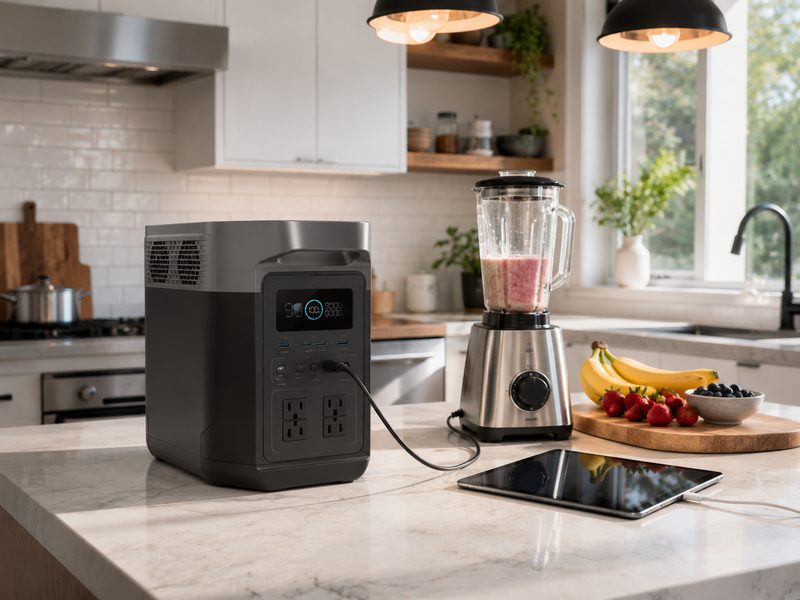
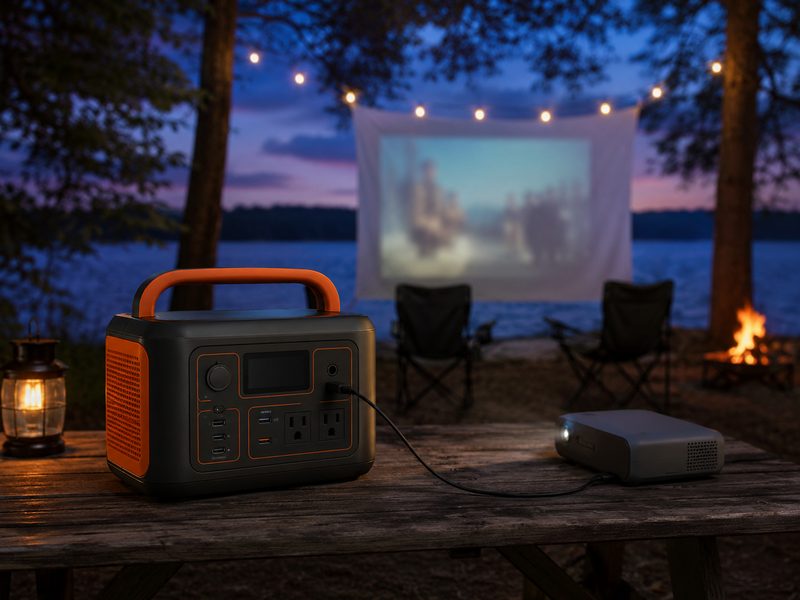
EcoFlow DELTA 2 vs Jackery Explorer 1000 v2
This is the matchup that most shoppers end up deciding between. Both are ~1,000Wh LiFePO4 units with fast charging, dual USB-C, and enough power for camping or light home backup.
| Spec | EcoFlow DELTA 2 | Jackery 1000 v2 |
|---|---|---|
| Capacity | 1,024Wh | 1,070Wh |
| AC Output | 1,800W | 1,500W |
| AC Charge Time | 0–80% in 50 min | 0–100% in 60 min |
| Weight | 27.6 lbs | 24.2 lbs |
| Battery Cycles | 3,000 | 4,000 |
| Max Solar Input | 500W | 400W |
| Expandable | Up to 3kWh | No |
| Street Price | ~$699 | ~$599 |
Our take: The DELTA 2 is the better home backup unit — more output, expandable, and faster solar input. The Explorer 1000 v2 is the better camping companion — lighter, longer-lasting battery, and $100 less.
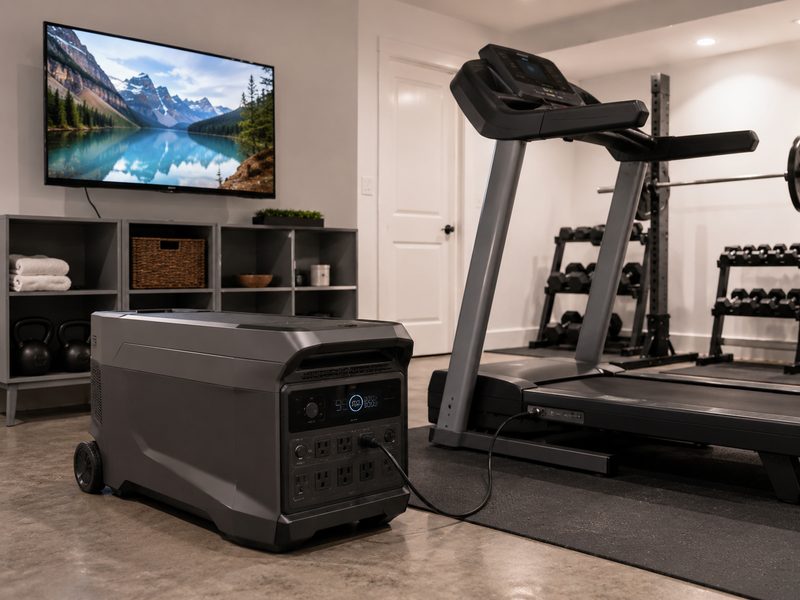
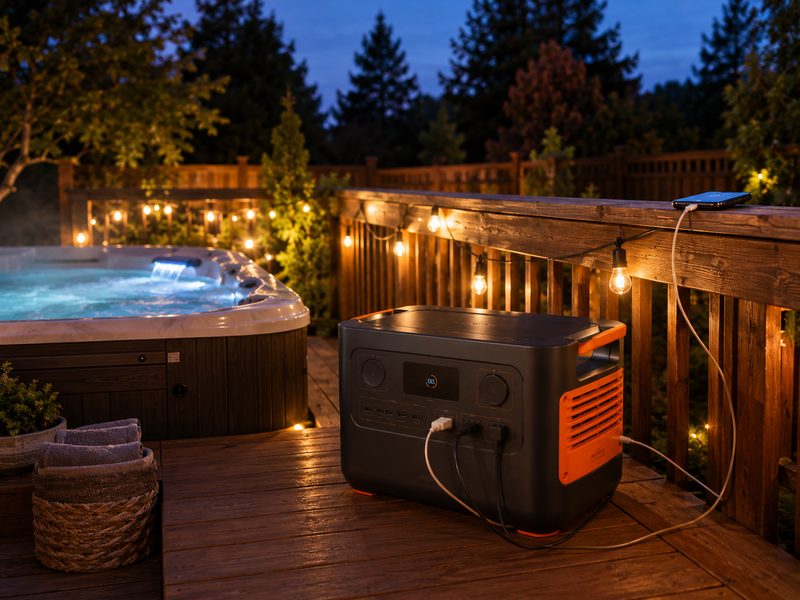
EcoFlow DELTA Pro 3 vs Jackery Explorer 2000 v2
The heavy hitters. If you need to keep a fridge running during a multi-day outage or power a construction site, these are the units to compare. Very different price points here — make sure you weigh capacity against budget.
| Spec | EcoFlow DELTA Pro 3 | Jackery 2000 v2 |
|---|---|---|
| Capacity | 4,096Wh | 2,042Wh |
| AC Output | 4,000W | 2,200W |
| Weight | 113 lbs | 46 lbs |
| Battery Cycles | 3,000+ | 3,000+ |
| 240V Support | Yes | No |
| Expandable | Up to 48kWh | Up to 12kWh |
| UPS Switchover | 10ms | 20ms |
| Street Price | ~$3,699 | ~$1,699 |
Our take: These aren’t really equivalent units — the DELTA Pro 3 is a home energy system that happens to be portable, while the Explorer 2000 v2 is a portable unit that can handle some home backup duties. The Jackery is $2,000 less and 67 lbs lighter. If you need true whole-home backup with 240V appliance support, the DELTA Pro 3 is worth the premium. For everything else, the Jackery delivers excellent value.
Final Verdict: Who Should Buy What
Buy EcoFlow if: You need home backup power with fast AC charging. You want expandability to grow your system over time. You value a best-in-class app with smart home integration. You run heavy loads like power tools, A/C units, or 240V appliances. Speed and output matter more than weight.
Buy Jackery if: Camping and outdoor portability are your main use cases. You want a simpler, plug-and-play experience without fiddling with apps. You prefer an integrated solar panel ecosystem that works out of the box. Budget matters — you want the most reliable power per dollar. Light weight and compact design are priorities.
The Bottom Line: Both brands make excellent products in 2026. With LiFePO4 batteries now standard across both lineups, you can’t really go wrong. The choice comes down to your primary use case: EcoFlow for power and features, Jackery for portability and value.