Affiliate Disclosure: SolarBuild.co earns commissions from qualifying purchases through Amazon Associates and eBay Partner Network. This doesn't affect our editorial independence — every product is recommended based on research and real-world testing data.
In an emergency — wildfire evacuation, hurricane, extended power outage, or worse — your phone becomes your most critical survival tool. Maps, weather, communication, emergency alerts, flashlight. All of it runs on a battery that lasts maybe 18 hours under heavy use.
A solar charging kit weighing under 2 pounds can keep your essential electronics running indefinitely, with nothing but sunlight. This guide covers the five best components for building an ultralight solar charging system that fits inside any bug-out bag, go bag, or 72-hour kit.
The Rule of Three for Bug-Out Power: Solar panel + power bank + short cables. That's it. The panel harvests energy during the day, the bank stores it for night. Total weight goal: under 2 lbs. Total cost: $60–$150.
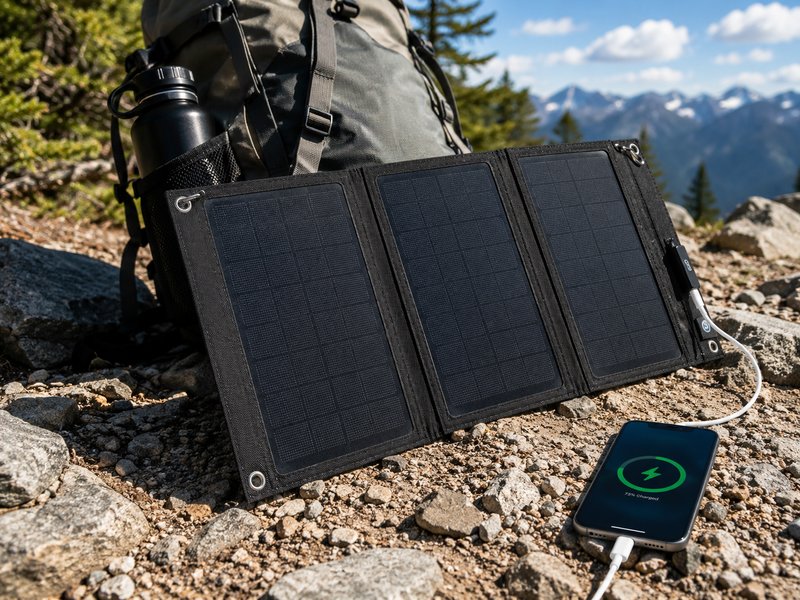
BigBlue 28W USB Solar Charger
The BigBlue 28W is the highest-performing foldable solar panel in independent testing, producing nearly 950 mAh per hour in direct sun — enough to charge a 10,000mAh power bank in 4–6 hours. It uses the same SunPower Maxeon cells found in panels costing twice as much.
The built-in ammeter is a killer feature for preppers: it displays real-time charging current so you know immediately if your panel is getting good sun or needs repositioning. Three USB ports let you charge a power bank and two devices simultaneously when conditions are strong. Metal grommets on each corner make it easy to lash to a backpack, tent, or tree branch.
At 1.44 lbs and folding down to about the size of a large paperback, it's light enough for a bug-out bag without being so small that it can't do the job. This is the panel that maximizes output per ounce.
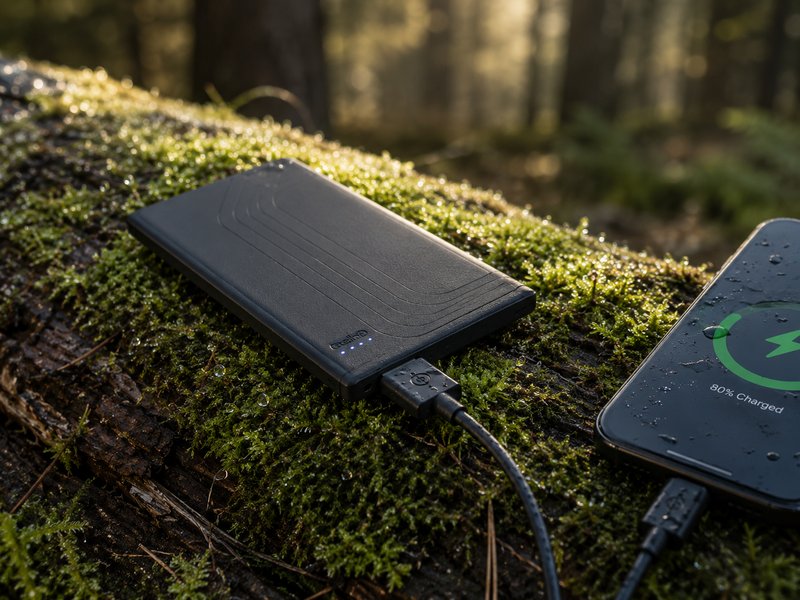
Nitecore NB10000 Gen4
The Nitecore NB10000 Gen4 is the most efficient power bank per gram you can buy. At just 5.2 ounces — lighter than a deck of cards — it delivers two full smartphone charges with USB-C Power Delivery for fast charging. It's thinner than most wallets.
This is the power bank that serious ultralight backpackers and preppers use because there's nothing else that comes close to the capacity-to-weight ratio. The carbon fiber shell is tough enough for rough handling, and the low-current mode keeps trickle-charging devices like earbuds and headlamps from shutting off prematurely.
Pair it with the BigBlue 28W panel above and your total solar kit weighs 1.76 lbs — less than a Nalgene full of water. That combo is our top recommendation for most bug-out bags.
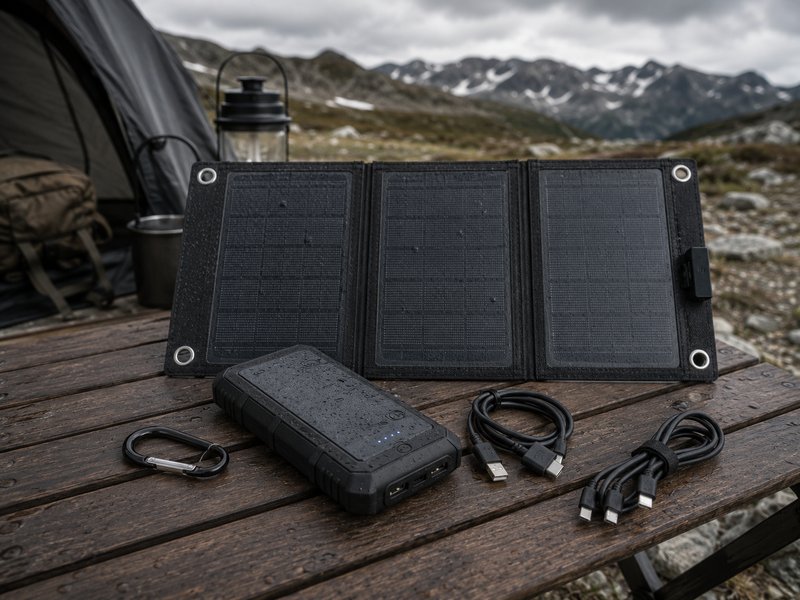
Goal Zero Venture 35 + Nomad 10 Kit
If you don't want to piece together components, Goal Zero's Venture 35 + Nomad 10 kit is the grab-and-go solution. The panel and power bank are designed as a system — the Nomad 10 has a built-in dock for the Venture power bank, and they charge as an integrated unit.
The Venture 35 power bank is IP67 waterproof (fully submersible), which matters when your gear might get dropped in a stream or caught in a downpour. The Nomad 10 panel has a built-in kickstand and LED charging indicator. Goal Zero's charge management tech is highly reliable — it won't drain your devices if clouds roll in, and it auto-resumes when sun returns.
The trade-off is weight (heavier than buying a BigBlue + Nitecore separately) and cost ($120+ vs ~$145 for the mix-and-match approach). But the convenience of a pre-matched, field-proven system has real value when you're packing in a hurry.
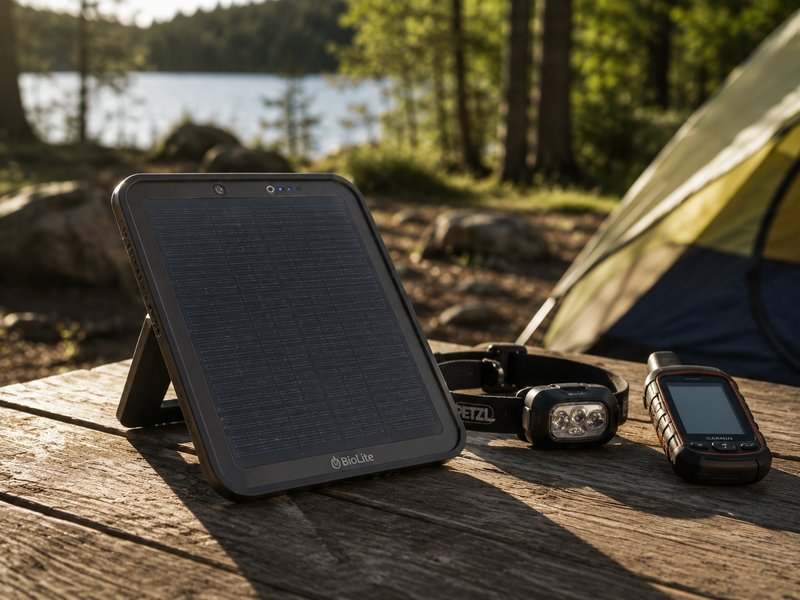
BioLite SolarPanel 5+
The BioLite SolarPanel 5+ is the only device on this list that's both a solar panel and a power bank in one unit. Set it up, angle it with the built-in sundial, and it harvests and stores energy simultaneously. At 13.4 oz, it's the lightest complete solar charging solution available.
The integrated 3,200mAh battery stores enough for about 75% of a modern smartphone charge — not a lot, but enough to keep your phone alive in emergency mode for another day. The sundial is genuinely useful: in testing, proper sun alignment improved output by up to 30% compared to guessing.
The limitation is output: 5W is slow, and the battery must charge before it can output power (no pass-through). This is the minimalist's pick — one piece of gear, one cable, under a pound. For preppers who want the smallest possible footprint with zero setup complexity.
SunJack 25W Solar Charger
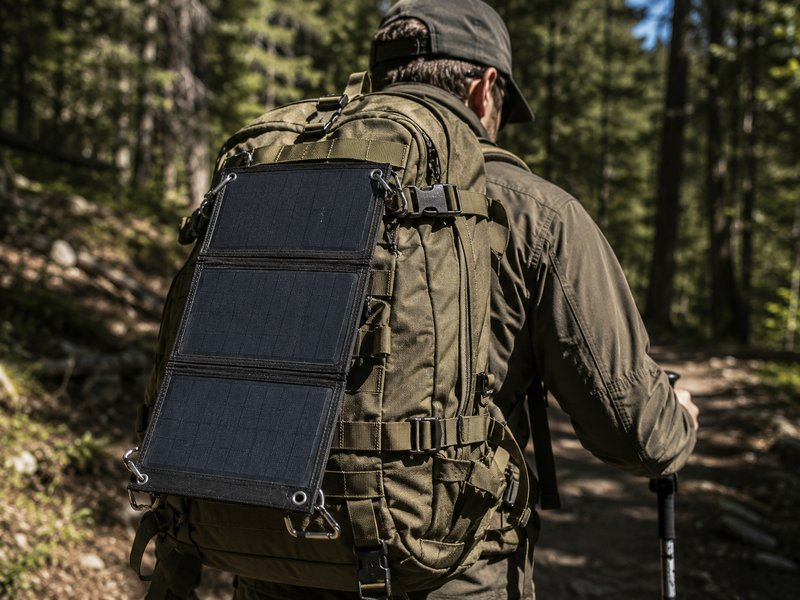
When conditions are rough — rain, mud, river crossings — you need a panel that won't die. The SunJack 25W is IP67 rated (fully waterproof, not just splash-resistant) with ETFE-coated cells that resist scratches and degradation far better than cheaper PET-film panels.
Quick Charge 3.0 support means it charges compatible devices up to 4× faster than standard USB. The magnetic closure is a small detail that matters: no Velcro to collect dirt, attract attention with noise, or wear out over time. A mesh pocket protects your devices while they charge.
At 25W, it sits in the sweet spot between the smaller 10W panels (too slow for serious use) and the larger 28W+ panels (heavier, bulkier). Pair it with the Nitecore NB10000 and you have a waterproof, fast-charging system that handles the worst conditions.
Quick Comparison
| Product | Type | Output | Weight | Waterproof | Price |
|---|---|---|---|---|---|
| BigBlue 28W | Panel | 28W / 950mAh/hr | 1.44 lbs | IPX4 | ~$65 |
| Nitecore NB10000 | Power Bank | 10,000 mAh | 5.2 oz | No | ~$85 |
| GZ Venture 35 + Nomad 10 | Kit | 10W / 9,600 mAh | ~2.2 lbs | IP67 / IPX6 | ~$130 |
| BioLite SolarPanel 5+ | All-in-One | 5W / 3,200 mAh | 13.4 oz | No | ~$65 |
| SunJack 25W | Panel | 25W / QC 3.0 | ~1.7 lbs | IP67 | ~$90 |
How to Build Your Bug-Out Solar Kit
The Recommended Loadout (~$150, ~1.8 lbs)
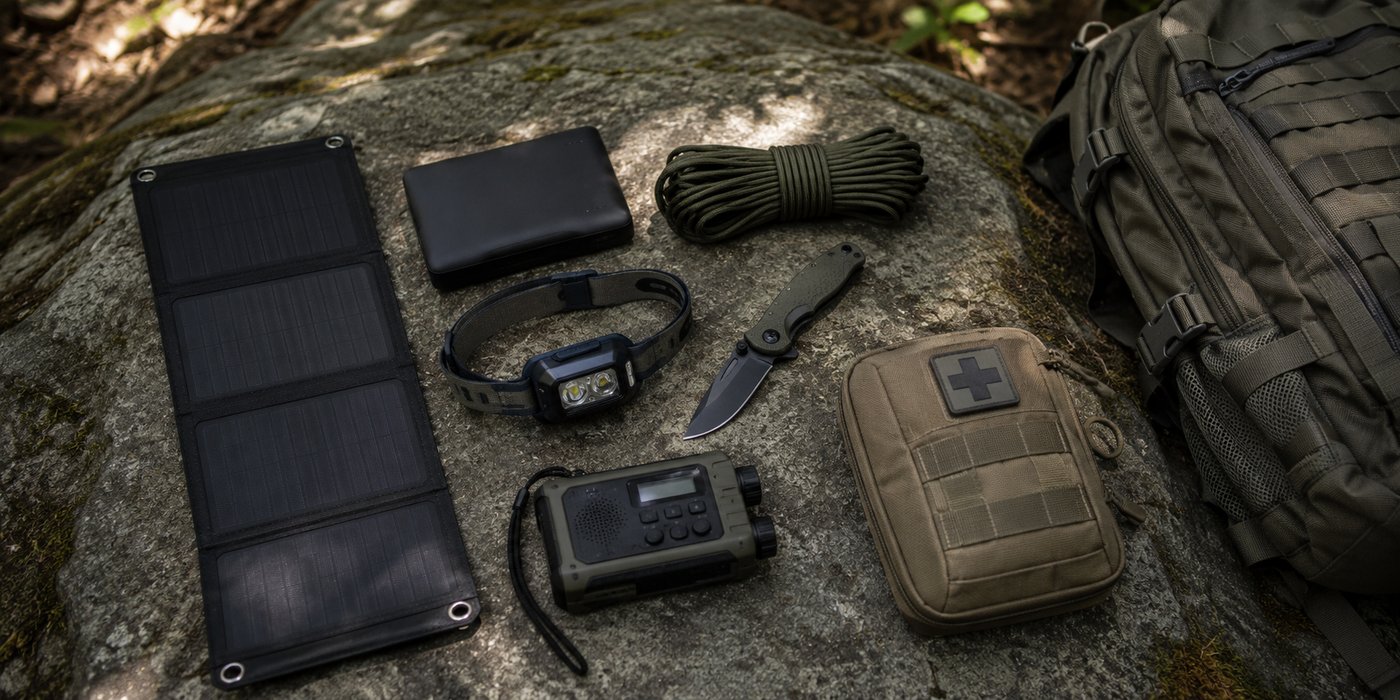
For most preppers, the optimal bug-out solar kit is a two-piece system: a foldable panel for harvesting and a power bank for storage. Our top combo:
- BigBlue 28W panel — harvests energy during camp stops or rest breaks (1.44 lbs)
- Nitecore NB10000 Gen4 — stores energy for nighttime use and on-the-move charging (5.2 oz)
- Two short USB-C cables — 1ft cables reduce tangle and weight (~1 oz total)
Total weight: ~1.8 lbs. Total cost: ~$150. Charges a phone from dead in 2–3 hours of direct sun. Stores enough for 2 full phone charges overnight. Indefinitely renewable.
The Budget Loadout (~$65, 13.4 oz)
If weight and cost are your top priorities, the BioLite SolarPanel 5+ is the entire kit in one piece. Set it up at camp, charge during the day, use the stored energy at night. Won't charge as fast, won't store as much — but at 13.4 oz and $65, it's hard to beat for a minimalist go bag.
The Rough-Conditions Loadout (~$175, ~2 lbs)
If your evacuation plan involves rain, river crossings, or harsh terrain, swap the BigBlue for the SunJack 25W (IP67 waterproof) and pair it with the Nitecore NB10000 wrapped in a small dry bag. Everything survives getting soaked.
What Can You Actually Charge?
With a 28W panel and 10,000mAh bank, here's what you can keep powered indefinitely with 4–6 hours of sun per day:
- Smartphone — 2 full charges per day
- Emergency radio — runs for weeks on one charge
- GPS device (Garmin inReach, etc.) — charge every 2–3 days
- Rechargeable headlamp — charge every 3–5 days
- Rechargeable AA/AAA batteries — via USB charger
- Satellite communicator — charge weekly
Tips for Maximum Output in the Field
- Don't charge while hiking. Despite what the marketing photos show, panels strapped to a moving backpack produce 70–80% less than a stationary panel pointed at the sun. Use rest stops and camp time instead.
- Angle matters enormously. A panel lying flat produces 30–40% less than one angled directly at the sun. Use the kickstand, lean it against your pack, or prop it on rocks.
- Charge the bank, not your phone directly. Cloud interruptions reset direct-charge connections on most phones. Charging a power bank is more tolerant of intermittent sun.
- Keep panels cool. Solar cells lose efficiency above 77°F (25°C) surface temperature. Don't lay them on hot pavement or dark rocks — elevate on light surfaces when possible.
- Short cables only. Every foot of cable adds resistance and reduces charging speed. Use 1ft cables for solar charging.
Cross-Reference
For larger emergency setups (home power outages, sheltering in place), check our Best Emergency Solar Kits guide. For phone-only charging, our Best Solar Phone Chargers guide covers lighter options. And use our Solar Sizing Calculator to figure out exactly how much panel wattage you need for your specific device loadout.
Our Verdict
The BigBlue 28W + Nitecore NB10000 Gen4 combo is the best bug-out solar kit for most people. It maximizes charging speed and storage capacity while staying under 2 lbs — the sweet spot where you actually keep it in the bag instead of leaving it behind because it's too heavy.
If you want zero assembly and the absolute lightest option, the BioLite SolarPanel 5+ does everything in one piece at 13.4 oz. If you want a pre-matched system from a brand with decades of field use, the Goal Zero Venture 35 + Nomad 10 is the kit to grab. And if your plans involve weather that would kill lesser gear, the SunJack 25W's IP67 rating means it'll still be working when everything else is soaked.
Whatever you choose — buy it now, charge it, put it in the bag, and forget about it until you need it. That's the whole point.