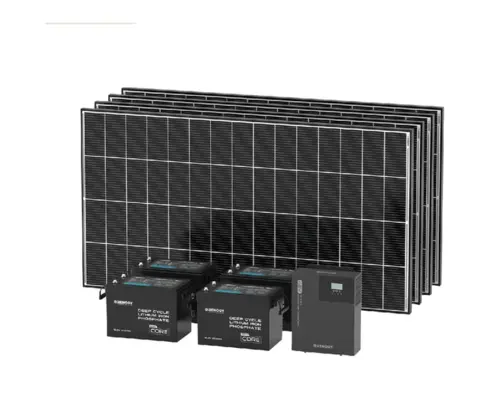
In winter a solar panel makes less energy mainly because there is less usable sunlight: days are shorter, the sun sits lower, clouds and shade matter more, and snow can cover the glass. Cold itself does not hurt a panel, it helps. Expect a clear shortfall against summer, plan your battery and array around the worst weeks, and measure your own output instead of trusting a yearly average.
What actually changes in winter
Four things move together. Days get shorter, the sun climbs less high, bad weather is more common in many places, and low sun makes every nearby tree, roofline and fence cast a longer shadow. Timeanddate notes that the December solstice is the shortest day of the year in the Northern Hemisphere, and that the effect grows with distance from the equator. Where you live decides how steep the change is, so a cabin far north loses more than one far south. The same page adds that the earliest sunset comes a few days before the solstice and the latest sunrise a few days after, so the darkest stretch of the year is wider than a single date.
Low sun and panel angle
A panel produces the most when it faces the sun squarely. PVEducation explains that only the sunlight perpendicular to the panel counts, so the sun's elevation, which depends on latitude and season, sets how much reaches a tilted surface. It also says that for a fixed tilt, the best angle over a whole year is about equal to your latitude, that steeper tilts suit high winter demand, and that shallower tilts capture more summer sun. For a shed or cabin that matters most in winter, a steeper setting favors the low sun. The mount comparison explains how a seasonal adjustment fits into the three common choices, and the winter Voc guide covers the voltage side of a steeper, colder array.
Cold is not the enemy
PVEducation says silicon cells lose open-circuit voltage as they warm and that colder cells generally perform better, summing it up as solar cells loving cold sunny environments. So a bright January noon can yield strong momentary output from a panel, even though the daily total is small. The limit is the amount of light and the number of hours, not the temperature. The catch is voltage: a cold panel can exceed a controller or station input limit, so check the margin before winter, not after.
Snow, clouds and shade
Snow on the glass blocks light, although Solar.com notes that some light still gets through and that panels run warmer than the air, which helps snow slide off. Overcast days cut output further, and a low winter sun means shadows from a tree that was harmless in July. Walk your site at midday in December, or follow the site survey guide, and note what shades the array at 10 a.m. and at 2 p.m. If a panel has a shaded corner, Wikipedia notes that shade on part of a module can drop one or more cell strings to nearly zero, so a small shadow can cost more than its size suggests. For snow itself, the snow clearing guide covers when to wait and when to brush.
Set realistic expectations and measure
| Question | How to answer it for your site |
|---|---|
| How much does my array make on a clear winter day? | Log the controller or meter reading across a few clear days in December |
| How much on an overcast day? | Log a gray day too; it is the one that sizes your battery |
| What does the load need each day? | List loads and run times, as the sizing guide describes |
| How many bad days in a row can I ride out? | Pick a number you can live with, then size battery capacity to match |
Your own log beats a national average. Many controllers and station apps show daily harvest, and a simple DC watt meter fills the gap if yours does not. Keep the panels clean and clear, record what the weather was, and compare against the load list in the sizing guide. Our solar sizing calculator is a starting point for the arithmetic, and you should replace its generic assumptions with the shortfall your log shows.
Squeezing more from the same panels
Before buying anything, work through the free fixes. First, steepen the tilt if the mount allows it, and aim the panel toward the equator, because PVEducation notes that light striking the back of a module produces no power. Second, remove shade, whether that means trimming a branch, moving a portable panel a few feet or shifting it each day as the sun moves. Third, keep the glass clear of snow, leaves and grime. Fourth, shorten and thicken the cable run if voltage drop is eating into a small panel's output, as the cable voltage drop guide describes. Fifth, shift flexible loads to the middle of the day: run the pump, charge the tools or heat the water when the panel is producing, not after dark. These changes cost little, and together they can matter as much as a new panel.
When to size up
If the log shows you cannot cover the winter load, you have three levers: reduce the load, add battery capacity so you can ride out gray days, or add panel area. At small project scale, another panel is often the simplest answer, since extra area helps on every day, including thin gray ones. Adding panels raises controller and wiring limits, so recheck the maker's specs first, and use the series versus parallel guide before changing the layout. A backup source, such as a charger or generator, is a legitimate choice when a winter load is critical, since solar alone cannot promise energy on a dark week.
Bottom line: Winter output falls mainly because of shorter days, a lower sun, weather and shade, not because of cold. Tilt steeper for the low sun, clear shade and snow, log your own output on clear and gray days, and size panels and battery to the shortfall you measure.
Frequently Asked Questions
Do solar panels work in winter?
Yes. PVEducation says colder cells perform better, but short days, a low sun, clouds and snow cut the daily total. Expect a clear shortfall against summer.
Why do panels make less power in winter?
There is less usable sunlight. Timeanddate says the December solstice is the shortest day in the Northern Hemisphere, and a lower sun delivers less to a flat panel. Weather and shade add to it.
What tilt is best for winter?
PVEducation says steeper tilts suit high winter demand and that a year-round fixed tilt is about equal to latitude. For a winter-critical system, a steeper seasonal setting favors the low sun.
Does snow on panels stop output?
It cuts it. Solar.com notes some light passes through and panels run warmer than the air, so snow often slides off. Wait for the sun if you can, and clear only what you can reach safely.
How do I know if I need more panels?
Log your array output on clear and gray winter days and compare it with your daily load. If the log falls short, cut loads, add battery capacity or add panel area within your controller limits.
Sources and verification
The sun angle and temperature points below come from the sources listed. Your panel and controller manuals set the voltage and input limits for your system.
- Timeanddate, December Solstice: shortest day in the Northern Hemisphere, effect growing with distance from the equator, and the timing of earliest sunset and latest sunrise.
- PVEducation, Solar Radiation on a Tilted Surface: perpendicular sunlight, sun elevation, and tilt versus season.
- PVEducation, Effect of Temperature: colder cells have higher voltage and perform better.
- Solar.com, Removing Snow from Solar Panels: light passing through snow and panels shedding snow as they warm.
- Wikipedia, Solar panel (secondary source): partial shading effects.
None of these pages gives a winter production figure for your location, so we state none. Measure your own array and check your site data.