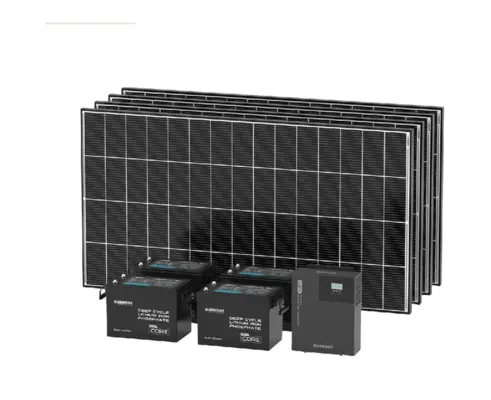
The last utility to reach remote land used to be the hardest; now it's a dish and a power problem — and the power problem is this series' home turf. This build puts real internet anywhere with sky: a solar system sized for a satellite terminal or LTE router, the networking to spread it, and the enclosure craft to survive unattended seasons. It's the build that makes the off-grid cabin workable, the remote worksite connected, and the back-forty camera stream boring. Here's the honest architecture and the math that sizes it.
The load that changed the math
Satellite internet's arrival in dish form made connectivity portable, but the power appetite is real and continuous: satellite terminals draw steadily around the clock — a heater-and-motor-assisted dish in winter drawing more — which sums to a daily budget that dwarfs every trickle build in this series. The alternatives scale down: LTE routers and cellular gateways sip a fraction of a dish's draw where cell coverage reaches (the property camera build's fork, scaled up), and the point-to-point bridge from a connected building remains the cheapest bandwidth in the catalog where line of sight exists. The design consequence: this is a real solar system, not a trickle build — sized like the workshop guide's tier, with the battery carrying the full overnight draw and the array recovering it plus margin, per the runtime calculator's arithmetic applied to an always-on load.
Component list
Satellite terminal or LTE gateway (the load)
$$–$$$The mission hardware: the satellite dish class for anywhere-with-sky service, or an LTE/5G router with external antenna for covered sites at a fraction of the power budget. The choice is the property camera fork writ large — check actual signal at the actual site before the power system gets sized around either answer.
Battery bank: 100–200Ah LiFePO4
$$The overnight carrier: an always-on load times twenty-four hours, held with cloudy-day margin, lands squarely in the 100Ah-class-and-up tier from the battery guide — with the dish's winter draw arguing for the second hundred. The heated-variant and enclosure rules apply in full at an unattended site.
Array: 200–400W + MPPT
$$The daily recovery: array wattage sized to replace the full daily budget in your site's real winter sun — the season that sizes everything — through a proper MPPT per the controller guide. The workshop guide's fixed-mount practices apply; the site survey guide's measured sun replaces optimism.
DC power delivery (the efficiency trick)
$The draw-trimming move: many terminals and routers accept DC input via the aftermarket DC conversion kits the off-grid community has standardized — skipping the inverter's conversion tax and idle draw on a 24/7 load, which compounds into real battery savings. Where the load insists on AC, a small pure sine inverter sized honestly, switched never (it's always on), and fed per the wiring guide.
Network spread: mesh, bridge & PoE
$The distribution layer: outdoor mesh nodes or PoE access points spreading the connection across the cabin, yard, and outbuildings, plus the point-to-point bridge for the far structures — the property camera build's radio craft, now carrying the whole property's traffic. PoE runs power and data down one cable, which enclosure builders learn to love.
Enclosure, surge & monitoring
$The unattended-site insurance: the weatherproofing guide's full treatment — vented IP enclosure, glands, critter screen — plus surge protection on the vulnerable long runs (antennas and PoE lines are lightning's favorite paths; the grounding guide's rules apply squared), a smart plug or relay for the remote reboot every router eventually demands, and the shunt monitor that lets you check the battery from anywhere the internet you built reaches.
The station-first shortcut
Before committing to the component build, the feasibility version deserves its due: a power station from the flagship classes runs a terminal or router for a day or more per charge, and paired with a folding panel it operates a temporary internet station with zero installation — the worksite week, the land-shopping trip, the proof-of-concept season before the permanent build. The telemetry the station's app provides is also the honest measurement this build's sizing wants: a week of real draw data from your actual terminal at your actual site beats every forum estimate. Many builders run station-first for a season, size the permanent system from the logged truth, and then cascade the station back to the household outage plan — the buy-then-build sequence the DIY-vs-buying comparison endorses, applied to connectivity.
The feasibility tier, productized
A Bluetti station plus folding panel runs a terminal or router off-grid today — the zero-install proof of concept whose telemetry then sizes the permanent build honestly.
Check Bluetti's current pricing →The build, in order
Site survey first, twice: signal (dish sky-view or LTE bars, measured at the mast's actual height) and sun (the survey guide's winter-honest reading), because both verdicts move hardware choices. Then the standard system build at workshop scale: panels mounted per the fixed-array practices, battery and controller in the enclosure with the full liturgy — battery first, LiFePO4 profile, panels last, everything fused — and the DC delivery branch to the terminal, with the surge protection landed at the enclosure's entry. Mount the dish or antenna per its manual's sky demands, spread the network, and commission with a week of the shunt monitor's telemetry: the real daily draw against the array's real recovery, winter-corrected mentally, is the reading that confirms the sizing or buys the next panel before the site is three hours away and dark.
The bandwidth footnote for camera-heavy properties: the station changes the surveillance math from the property camera build — LTE cameras' data plans and upload sensitivity tuning give way to full-fat WiFi streaming once the station's network spreads, which is why the internet build frequently follows the first camera by exactly one season. Budget the mesh spread with that migration in mind from day one, and the whole camera fleet converts for free the week the station lights up.
Operating an unattended utility
The station's success metric is remote boringness, and three habits deliver it. Power discipline: the monitor's telemetry checked with the morning coffee, the seasonal trend watched for the winter squeeze, and the load-shedding plan (the smart relay dropping the mesh spread before the terminal, the terminal before the battery floor) configured once and forgotten. Reboot capability: the remote-switchable outlet on the router tier, because every network device ever made eventually needs its ten seconds of darkness and the drive out is the expensive version. The seasonal visit: the weatherproofing walk, the panel wipe, the enclosure's condensation-and-critter check, and the firmware pass — fifteen minutes that keep the streak alive. Communities of off-grid builders converge on the same report: sized honestly for winter and guarded per this series' checklists, the station simply runs, and the land stops being off the map without going on the grid.
Bottom line
Measure signal and sun before hardware, size the battery for the whole night and the array for the winter, deliver DC where the load allows, and armor the long runs against surge. It's the biggest always-on load in the projects catalog — and the one that makes every other remote build supervisable from the couch, which is why it earns its system-scale budget.
Frequently Asked Questions
How much solar does satellite internet need?
A real system, not a trickle build: the terminal's continuous draw times twenty-four hours sets a daily budget in the workshop-tier range — battery sized for the full night with cloud margin, array sized to recover it in winter sun. LTE routers cut that budget to a fraction where coverage reaches.
Can I run the dish on DC to save power?
Often — the off-grid community's DC conversion kits skip the inverter's conversion tax and idle draw on a 24/7 load, compounding into real savings. Where the hardware insists on AC, a small always-on pure sine inverter sized honestly does the job.
What happens during a week of cloudy weather?
The battery margin and the load-shedding plan: the monitor shows the trend, the smart relay sheds the mesh spread first, and honest winter sizing means the terminal itself rides through. Systems sized to summer are the ones that call for a February drive.
How do I reboot the router when I'm not there?
A remote-switchable smart outlet or relay on the router's feed — configured before it's needed, because every network device eventually wants its ten seconds of darkness. It's the cheapest insurance in the build.
Is lightning a real concern for this build?
The most exposed one in the series: antennas, masts, and long PoE runs are surge's favorite paths. Ethernet surge protectors at the enclosure, proper grounding per the grounding guide, and unplugging nothing-critical during direct storms are the standing defenses.