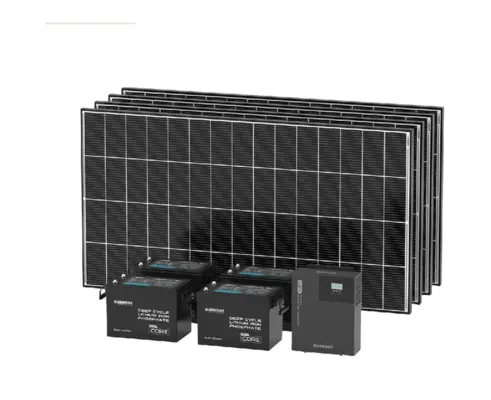
The land you can't watch is the land things happen to — the back forty, the hunting lease, the future homesite, the storage lot, the trailhead gate. This build puts a permanent solar-powered eye anywhere with sky access: a camera that texts you when something moves, streams when you ask, and never needs a battery run. The trick is that "off-grid camera" is really two different builds depending on one question — is there any network out there? Here's both versions, honestly.
The one question that forks the build
If WiFi reaches (or can be made to reach): the build is the shed security pattern stretched — a standard WiFi security camera on a solar-fed battery, with the network extended via outdoor mesh nodes or a directional point-to-point bridge, which can carry a link surprisingly far with clear line of sight. If nothing reaches: the build goes cellular — an LTE camera with its own data plan (the mature trail-cam ecosystem and the newer LTE security-cam class both serve here), needing only cell signal and sun. The cellular fork costs a modest monthly plan and trades video richness for anywhere-ness; the WiFi fork costs bridge hardware and setup but delivers full-fat streaming free forever. Everything else — panel, battery, mounting, weatherproofing — is shared between them.
Component list
LTE cellular camera (no-network fork)
$$The anywhere option: LTE security cameras and premium cellular trail cams send motion alerts, clips, and on-demand photos over their own data connection — Reolink's Go line and the established trail-cam names anchor the class. Check carrier band coverage at the actual site (a signal-strength app visit beats coverage maps), and budget the data plan into the honest cost.
WiFi camera + point-to-point bridge (network fork)
$$The full-featured option: a standard WiFi camera fed by a directional wireless bridge pair — one radio on the house, one at the site, line of sight between them. Continuous streaming, no monthly fees, and the bridge becomes property-wide infrastructure for future cameras, sensors, and the gate build's smart module.
Solar panel (20–50W) + adjustable mount
$Sized generously for the always-listening electronics: 20W maintains efficient cameras; 50W adds bridge radios, heavier cameras, and northern winters. A pole-mount with adjustable tilt lets you chase the winter sun angle — the margin habit every build in this series repeats.
LiFePO4 battery + weatherproof box
$–$$The endurance core: a 20–50Ah LiFePO4 in a vented weatherproof enclosure holds a week-plus of camera-and-radio draw for the cloudy stretches, with our battery guide's cold-weather caveats applying in full — heated packs or generous capacity for hard-freeze country. The box matters as much as the battery: sun-sheltered, critter-proof, lockable.
Charge controller + buck converter + fusing
$The standard chain: a small controller with LiFePO4 profile, a buck converter matching the camera's input, inline fuses on battery and branches, and marine-grade wire — the wiring guide's rules verbatim, outdoors where they matter most.
Mounting, security, and signage
$The site layer: a pole or tree mount at height (theft's cheapest deterrent is inconvenience), a security enclosure or lag-bolted lockbox for the camera class that warrants it, camouflage where discretion serves, and the surveillance signage that both deters and, in many jurisdictions, the law expects. Hide the battery box separately from the camera — thieves take the visible thing.
The build, in order
Scout first: visit the site with a phone and check both forks' viability — cell bars for LTE, line-of-sight back to the house for a bridge — because the network answer picks half your parts list. Then the standard sequence: mount the panel for winter sun, battery-to-controller first, configure, panel last, everything fused. Mount the camera high with its view deliberate (gates, approaches, and choke points beat wide empty vistas — cameras watch paths, not acreage), aim the panel, and walk the false-positive tuning: motion zones and sensitivity that ignore the branch that waves all day. For the bridge fork, align the radios patiently — the difference between a flaky link and a solid one is usually a degree of aim and a cleared branch. Then leave it alone; the build's success metric is how long you forget it exists.
Siting the eye: where cameras actually earn their keep
Remote-property surveillance is a placement discipline before it's a hardware one. Watch the choke points — the gate, the driveway throat, the trail junction, the door of the far building — because everything that happens on land arrives and leaves through its narrow places, and a camera on a choke point sees more in a week than a vista camera sees in a year. Height buys three things at once: theft resistance, a downward angle that renders faces and plates instead of silhouettes, and a view over the brush that grows every season. Face cameras north where the layout allows, sparing the lens the daily sun-glare hours that wash footage exactly when activity peaks. And think in pairs on larger parcels: one camera announcing itself at the gate (deterrence is a feature — that's what the signage is for) and one discreet unit deeper in, covering what someone who ignored the first camera does next. The build's electronics are replaceable; the siting judgment is what turns a camera into evidence.
Power math for the always-on load
Unlike the gate's burst duty, a property camera is a continuous sipper — the LTE radio or bridge link listening around the clock is the real budget, with motion events as surcharge. Sum the camera's standby draw, the radio's, and a motion-day's uploads; hold a week of that in the battery; and let the panel's daily surplus be your weather insurance — the same watt-hour arithmetic as our sizing guide, at trail scale. The classic failure is optimistic standby math meeting a cloudy November; the classic fix is the battery size you almost bought. When in doubt at a remote site you'd rather not revisit soon: one class up on both battery and panel, and the site stops being a maintenance destination.
The data and alert diet
Remote cameras live or die by their notification hygiene. Untuned, a property camera cries wolf hourly — wind, deer, headlights — until its alerts get muted, at which point the system exists but the surveillance doesn't. The tuning pass: motion zones drawn tight around the choke points rather than the whole frame, sensitivity stepped down until the daily false count nears zero, animal-versus-person detection enabled where the camera offers it, and alert schedules that match when activity would actually be anomalous. On the LTE fork, the same tuning is also the data-plan diet — every false clip uploads on your dime — which aligns the incentives nicely. A camera whose alerts are rare enough to always check is the only kind that ever catches anything.
Bottom line
Answer the network question at the site, not the desk; build the fork it dictates; size the battery for the week the sun takes off; and mount everything like theft and weather are both real, because out there they are. The result is the property that reports in — and the peculiar peace of land you can finally see from the couch. The back forty stops being a question mark, the alerts stay rare enough to matter, and the only maintenance visit is the seasonal one you were making anyway — panel wipe, connection glance, done.
Frequently Asked Questions
Do I need a cellular plan for an off-grid camera?
Only on the LTE fork — where no network reaches, the camera's data plan is the honest ongoing cost. Where line of sight to the house exists, a point-to-point bridge delivers full WiFi with no monthly fee.
How far can a WiFi bridge reach?
With clear line of sight, directional bridge pairs carry links across distances that cover most properties — obstructions, not distance, are the usual limit. The site visit with the actual hardware's alignment tools settles it.
How long will the camera run without sun?
As long as the battery you sized: the build targets a week-plus of always-on draw held in reserve, with the panel's daily surplus refilling it. Cloudy-season reliability is a battery-size decision made on build day.
How do I keep the camera from being stolen?
Height, locks, and separation: mount high enough to require effort, use security enclosures on accessible mounts, hide the battery box away from the visible camera, and let signage do its quiet work. Inconvenience deters more theft than any single lock.
Will this work in freezing winters?
The electronics generally tolerate cold well; the battery is the concern — LiFePO4 mustn't charge below freezing, so hard-freeze sites want heated packs, sheltered boxes, or generous capacity that rides out the coldest snaps. Our LiFePO4 guide covers the options.