It's the first question every backup-minded buyer asks, and the honest answer is a happy one: yes — a properly chosen power station runs a household refrigerator, usually for far longer than people expect. The interesting parts are the two numbers that decide it (surge and daily watt-hours), the techniques that double your runtime for free, and the point where "runs the fridge" becomes "runs the fridge indefinitely." Here's the whole picture.
How a refrigerator actually uses power
A fridge is not a steady load — it's a compressor that cycles: a hard start (a surge of several times its running draw, lasting a moment), a running stretch of modest draw while it pulls temperature down, then silence until the thermostat calls again. Averaged across a day, a modern efficient refrigerator lands in the rough vicinity of a kilowatt-hour daily — less for newer efficient units, more for older boxes, side-by-sides with ice makers, and hot kitchens. Two consequences follow. First, the surge rating is the gate: a station must absorb the compressor's start spike or it trips offline regardless of how big its battery is — this is the spec to check first, and where quality inverters from the budget class upward generally clear modern fridges comfortably. Second, capacity buys days, not hours: because the compressor rests most of the time, a 1kWh-class station typically carries a fridge through the better part of a day, and the flagship classes carry it for days.
The runtime math, worked
Take the planning method from our watt-hours guide: your fridge's real daily consumption (measure it with a plug-through meter for a day — the single most useful pre-outage errand) divided into the station's usable capacity (roughly 80–85% of sticker). A modern fridge in the kilowatt-hour-a-day class against a 1kWh station yields most of a day; against a 2kWh system, approaching two days; against the expandable flagship stacks of our home backup guide, several days on battery alone. Older or larger refrigerators compress those numbers — which is precisely why measuring beats assuming, and why the same station serves neighbors very differently. Freezers run the same math with their own numbers: chest freezers are famously efficient per degree held, upright frost-free units hungrier.
Doubling your runtime for free
Technique moves these numbers dramatically. Keep it closed: every opening dumps the cold air and buys a compressor recovery run; an outage fridge opened strategically twice a day consumes meaningfully less than one browsed hourly. Load the thermal mass: a full fridge holds temperature far longer than an empty one — and jugs of water frozen in advance during storm warnings turn the freezer into an ice battery that coasts the whole box through hours of compressor silence. Pre-chill: run both compartments a notch colder while grid power lasts, banking cold for the transition. Warm the room's expectations: a fridge in a cool basement works less than one beside a sunny window. Sequence the loads: per the outage playbook in our backup guide, give the fridge the station to itself when the kettle or microwave runs — the fridge won't notice minutes of pause, and the station's continuous rating will thank you. Together these habits routinely stretch the same hardware half again to double the naive runtime.
From hours to indefinitely: the solar loop
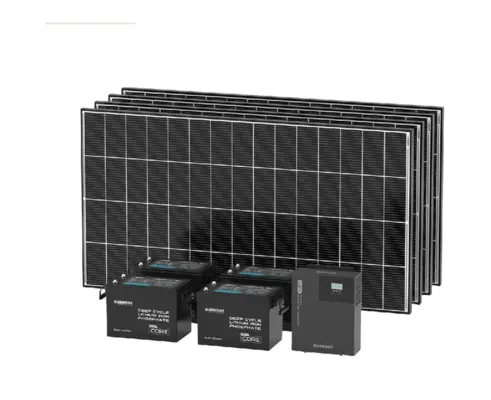
The refrigerator is where solar input stops being a feature and becomes the plan. A fridge's daily kilowatt-hour-class appetite sits comfortably inside what a 200–400W panel setup harvests in a decent day — meaning a station with real solar input plus adequate panel wattage runs refrigeration indefinitely: drain by night, refill by day, the cycle our backup power guide builds Tier 3 around. The specs that make it work: the station's solar input ceiling (the quiet differentiator between models), panel wattage bought honestly against weather (the panel guide's one-class-up rule), and deployment craft that maximizes harvest. This loop — not raw capacity — is what separates a fridge that survives an outage from a household that stops counting the outage's days.
The outage fridge kit
A small kit staged in advance makes refrigerator backup nearly automatic: the watt meter that produced your real daily number, a fridge thermometer for each compartment so "still safe" is a reading rather than a guess, a couple of gallon jugs living in the freezer as standing ice batteries, and a short heavy-gauge extension cord dedicated to the fridge-to-station run so outage night involves no cable scavenging. Add a card on the station noting the fridge's measured daily draw and the resulting days-per-charge, and the household's most important cold chain runs on arithmetic anyone can read at midnight.
The edge cases worth knowing
Ancient refrigerators with tired compressors can present startup surges that embarrass their labels — if the station trips on start despite adequate ratings, the fridge, not the math, is usually the anomaly, and a soft-start accessory or a newer fridge is the fix. Ice makers and door dispensers add draw and door-seal losses; disable the ice maker during outages. Garage fridges in extreme heat run nearly continuously and blow every average. Mini-fridges are gentler in draw but often crude in efficiency — measure rather than assume small means cheap. And medical refrigeration — insulin, medications — deserves the dedicated planning our medical backup guide gives it, where a small dedicated cooler-fridge on its own budget outperforms guarding the family kitchen box.
The bottom line
Yes — and the better question is for how long, which your own meter answers in a day. Clear the surge, budget the real daily watt-hours at an honest discount, load the thermal mass, keep the door shut, and add panels if the mission is indefinite. A refrigerator was the scariest load in the outage plan right up until it became the most solved one.
Frequently Asked Questions
How long will a 1000Wh power station run a full-size refrigerator?
For a modern efficient fridge in the roughly kilowatt-hour-a-day class, most of a day — stretched further by keeping doors closed, pre-chilling, and thermal mass technique. Measure your fridge's real daily draw with a plug meter for a number you can trust.
Why does my power station shut off when the fridge starts?
Compressor startup surge exceeding the station's surge rating — the gate spec for refrigerator duty. Quality modern stations clear typical fridges comfortably; very old compressors are the usual culprits, fixable with a soft-start accessory or a station class up.
Can solar panels keep a fridge running indefinitely?
Yes — a fridge's daily appetite fits inside what a 200–400W panel setup harvests in decent sun, so a station with adequate solar input runs the drain-by-night, refill-by-day loop for as long as the weather cooperates. It's the core pattern of serious outage planning.
Should I run the freezer or the fridge during an outage?
Both, using thermal mass wisely: pre-frozen water jugs turn the freezer into an ice battery, and moving some into the fridge extends its coasting. Chest freezers hold temperature so well that many households prioritize the fridge and let a full chest freezer ride unopened.
Does a mini-fridge use much less power than a full-size one?
Usually less, but not proportionally — many minis use crude cooling that erodes the size advantage. For medication or essentials duty, an efficient small unit measured with a plug meter beats assumptions in either direction.